
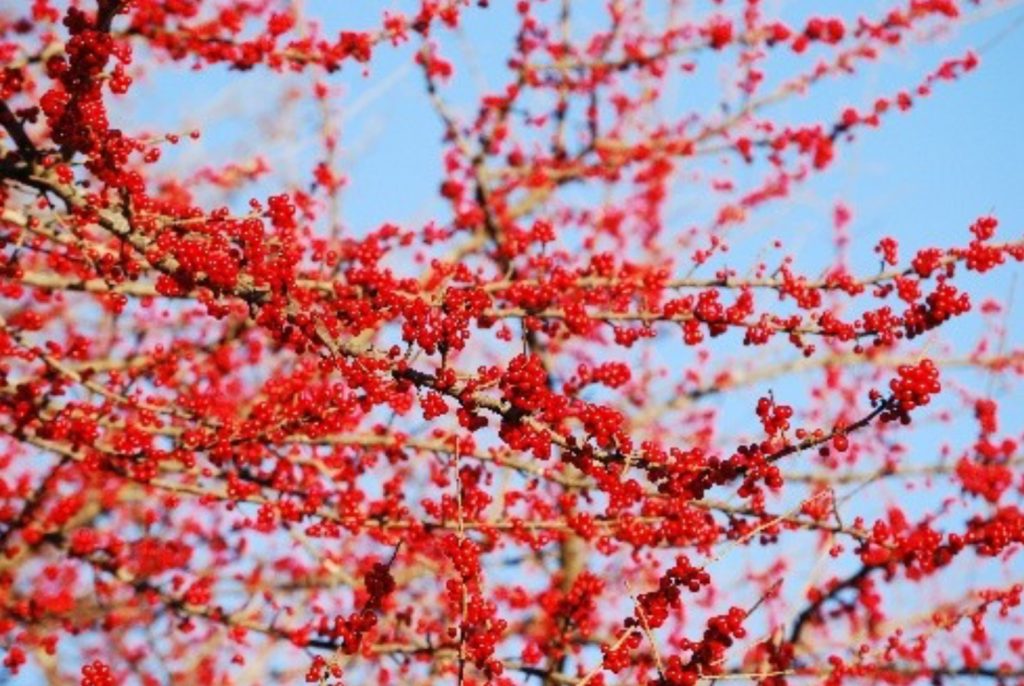
Scarlet Sparks in Winter: The Plant That Brightens the Chill
Great gardens look great in every season of the year. Most of us tend to visit garden centers only in the spring when we are fired up with enthusiasm for our gardens, and the elixir of the first warm sunny days energizes us to get to work. As a result, we often have gardens that are packed with color and look gorgeous in the spring. We have summer color from the annuals we purchased in the spring and fall color from changing leaves, but winter is a study in muted browns, greys, and spots of green. If you want to brighten your garden during the winter months and invite wildlife into your winter garden, consider planting a deciduous holly. This is a plant that bears brightly colored berries in fall and winter, which are made highly visible because this holly drops its green leaves in the late fall, like other deciduous trees. As a bonus, the cut branches make a wonderful addition to your holiday floral arrangements. If you don’t like red, there are also some varieties that feature yellow/gold berries!
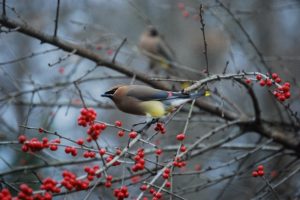 Yes, they are pretty, but they also have substance. Their berries are an important late-season and winter food source for cedar waxwings, robins, mockingbirds, and bluebirds. Squirrels also enjoy the berries primarily for the seed hidden inside and will begin to eat them even before they turn red. Late in the season, when the only remaining berries are at the ends of branches, it is quite entertaining to watch as the squirrels venture out on tiny branches that bend under their weight.
Deciduous hollies tolerate our poorly draining, heavy clay soil here in the Mid-South, and they have few pest or disease issues. They will have more berries if planted in full sun, by even in partial shade, they are show stoppers in the garden. They are native plants to the eastern U.S., and if that wasn’t enough, they are ornamental in size, so there is one that will fit into any landscape design. They require little pruning other than shaping or removing dead wood, making them perfect for a lower-maintenance garden.
As perfect as they seem, there are a few quirks to consider. Only female plants produce berries; they need a compatible male nearby for pollination. I did not know this when I planted my first one, but it has never been an issue for me. Any male holly can pollinate any female holly as long as they are blooming at the same time. Often, there is another holly nearby in your neighborhood that will act as a pollinator. If, however, you want to guarantee success, you will want to plant a compatible male nearby. One male will provide enough pollen for ten ladies. What was a problem for me was that when I purchased more trees in the spring. I thought I was told I was getting nine females and one male. It turned out that I only had three females, which ruined my planned design. Because they are in berry in November, it makes this the perfect time to purchase your own deciduous holly. You can be sure that it will have berries, and November is one of the best months to plant trees in the Mid-South.
The other quirk is that deciduous hollies like to sucker a bit, sending up sprouts around the base of the tree or popping up from the root a bit farther away as they try to form a thicket. If you prefer a single specimen, the errant sprouts are easily managed by pruning.
Two types of deciduous hollies thrive in the mid-south, Ilex decidua, commonly called “Possumhaw’ and Ilex verticillata, known by its common name “Winterberry”. The biggest difference is in the mature size and size of the berries. Winterberry has larger fruits and is generally grown as a multistemmed shrub, and is the smaller of the two at maturity. Possumhaw is generally grown as an ornamental tree and is taller at maturity. Its berries are smaller, but it is just as spectacular in the garden.
| Feature | Ilex decidua (Possumhaw) | Ilex verticillata (Winterberry) |
| Form | Small tree / large shrub (15–30 ft) | Multi-stemmed shrub (6–10 ft) |
| Habit | Open, airy branching | Dense, bushy |
| Berries | Smaller clusters, still showy | Heavy clusters, very showy, larger berries |
| Best use | Specimen / naturalized | Borders, rain gardens, mass planting |
| Suckering | Occasional sprouts | Will require more effort to control |
Varieties recommended for the mid-south
| Ilex verticillata (Winterberry) | ||||
| Variety | Berry Color | Height | Pollinator | |
| Winter Gold’ | Yellow/Gold | 5-8 feet | Southern Gentleman’ | |
| Winter Red’ | Red | 5-8 feet | Southern Gentleman’ | |
| Red Sprite’ | Red | 3-5 feet | Jim Dandy’ | |
| Ilex decidua (Possumhaw) | ||||
| Variety | Berry Color | Height | Pollinator | |
| Warrens Red’ | Red | 15-20 feet | American holly Ilex opaca, ‘Midas’ | |
| Sentry’ | Red | 15’-20’ (columnar) | Midas’, ‘Red Escort’ | |
| Finches Gold’ | Yellow | 10-15 feet | Midas’ | |
For maximum enjoyment, be sure to plant your new deciduous holly where it can be viewed from inside your home. It will be a cheerful sight for you to enjoy in the bleak midwinter.
November Gardening Activities
Plant You can continue to transplant evergreens, trees, and perennials throughout the fall and winter, as long as they remain dormant. However, fall planting crapemyrtles, edgeworthias, loropetalums, hardy gardenias, butterfly bushes, and warm-season grasses like muhly grass, Miscanthus, and Pennisetum can be a gamble if we have a severe winter. It’s the ideal time to plant spring-flowering bulbs. Consider planting some of the minor bulbs such as winter aconite, glory of the snow, species tulip, narcissus, and grape hyacinths.
Lawn Care Remove fallen leaves so they don’t smother grass. Shred fallen leaves for mulch or compost. You can mow over a light layer of leaves on your lawn with a mulching blade, turning them into a mulch that adds important nutrients back to the lawn.
Indoor Stop fertilizing indoor plants until spring. Force bulbs indoors like narcissus, hyacinths, and amaryllis for color early in the new year.
Other If still blooming at first frost, leave flower seed heads for the birds. Mulch beds with shredded leaves, aged compost, or pine needles. Remove spent annuals. Cut the tops off asparagus plants and mulch with a good layer of compost. Cover strawberries 2 inches deep with hay or straw to reduce weeds and increase winter protection. Winterize your irrigation system before freezing temperatures arrive to avoid broken pipes and costly repairs.
