
I am a big proponent of mulching our gardens, but I have experienced epic failures in my garden due to my mistakes. Wanting to make sure I was doing the right thing, I was curious if there were any downsides to using mulch in the garden.
Volcano Mulching
The biggest danger of mulch may be to the health of your trees. Many of the “professionally” managed landscapes around town have trees with piles of mulch around their base. This is known as “volcano mulching.” It looks like a mulch volcano with a tree shooting out of the top. If you copy this method, you are not doing any favors for your tree. Whenever you mulch, make sure that you can see the root flares at the base of the tree. A pile of mulch can also be a home to voles. Voles will gnaw through the outer bark of trees to reach the cambium layer, which is the thin, living tissue just under the bark that transports nutrients and water. This is especially common in winter, when grasses and green plants are scarce, and trees become a fallback food source, resulting in plant damage or death.
When you think about it, a pile of mulch is a nice home for a root. It is a moist environment that drains well. As the mulch decomposes, it provides nutrients for the roots to absorb. This environment, however, may be a little too nice for a young tree root. Just like the 30-year-old child that is still living at home rent-free with amenities of a full refrigerator and maid service, it resists leaving. Rather than venture out into the native soil searching for water and nutrients, the roots begin to circle. They can wrap partway around the trunk; these are what are known as girdling roots. They are harmless at first, but as both the root and the tree trunk increase in diameter each year, the root, in time, is pressing tightly against the trunk, essentially putting a chokehold on the tree, restricting the tree’s ability to transport water and nutrients. When this occurs, the tree goes into decline. If only the fine feeder roots are in the mulch mound, there is no problem. Unfortunately, you won’t know if you have girdling roots unless you remove the mulch pile to inspect the roots. Therefore, it is recommended that you spread out that mulch as far as the tree canopy and make sure that the root flare of the tree is visible.
One caution you hear is that mulch piled against the bark holds moisture, which in turn encourages disease and decay organisms that may attack the bark and living tissue. While this is logical, there is no published scientific evidence that verifies this line of thinking.
If your landscaper is volcano mulching your trees, you may have the wrong landscaper. Talk with them to understand their reason for mulching in this manner. If you don’t get a credible answer you may want to change your service provider. If a newly planted tree has been volcano mulched, it is an indication that the tree may have been planted improperly. If you only dig a shallow hole your can cover up your laziness with a pile of mulch. Poorly planted trees often have a short life. Your landscaper may need to replant under your supervision.
The Fungus Among Us
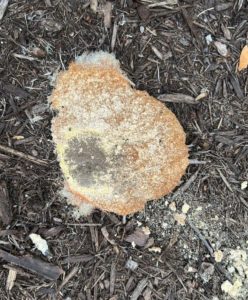
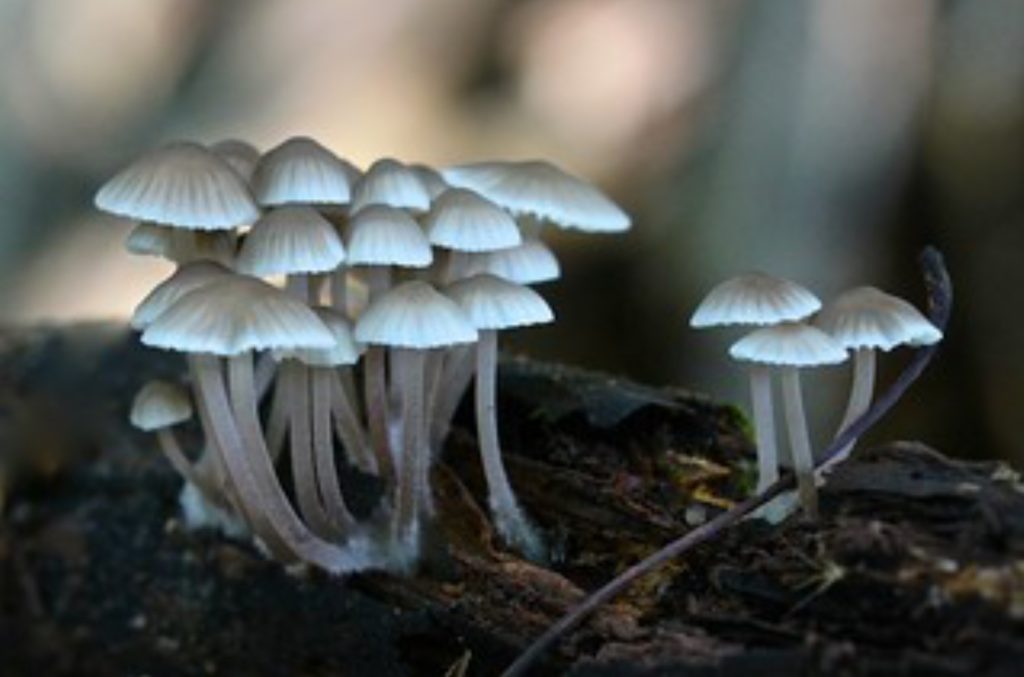
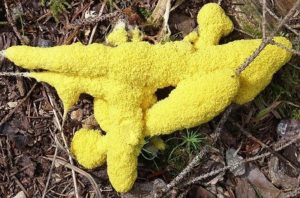 Many types of fungus will grow in an organic mulch. They are part of the team of decomposers that turn the organic material into nutrients that our plants can utilize. On occasion, the fruiting body of the fungus emerges. Generally, we recognize it as a mushroom, but it occurs in other forms, like the “slime molds,” which are not very attractive. Slime molds start as brightly colored (yellow, orange, etc.), slimy masses that are several inches to more than a foot across. They produce many tiny, dark spores. These molds dry out and turn brown, eventually appearing as a white, dry, powdery mass. One common name is “dog vomit slime mold,” which is quite an accurate description. Regardless of the form they take, fungus fruiting bodies are a sign of healthy soil. They are benign, but if they bother you, simply remove them.
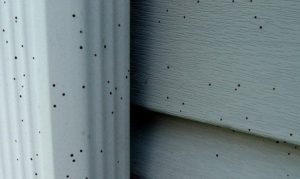 One more problematic fungus is artillery fungus, which “shoots” its black, tiny sticky spore mass, which resembles a small speck of tar. Once in place, the spore mass is very difficult to remove without damaging the surface to which it is attached. If removed, it leaves a stain. A few of these spots are barely noticeable, but as they accumulate, they may become very unsightly on houses or cars. The fungus is a tiny, cream or orange-brown cup with one black egg. The cup is approximately ¹/₁₀ inch in diameter. Areas of mulch with artillery fungi may appear matted and lighter in color than the surrounding mulch.
Fire Hazard
Having large areas of flammable materials lying around your property and close to your house sounds like a recipe for disaster. There is quite a bit of scientific evidence that shows having flammable or combustible materials close to homes increases fire risk. Embers or another ignition source would need to land in the mulch and remain long enough to ignite the mulch.
Termites
A common concern is whether wood-based mulches are attractive to termites. Termites aren’t generally drawn to mulch as a food source, but mulch creates moist, shaded conditions that can make your property more attractive to them. If you keep it pulled back about 6” from the house, the risk is low.
For me, the primary reason for using mulch is weed control. Some mulches are more effective than others in this regard. Nutrient-rich, finely textured materials like compost are great in vegetable beds but are not satisfactory mulches if the goal is weed control. Instead, they may contain some viable seeds and are a fertile base for the establishment of new weeds. Course materials that are less nutrient-dense, like single-hammered wood mulch or arborist chips, are better for controlling weeds. The depth of the mulch is also important; the thicker the better when it comes to weed suppression. At least 3-4 inches of hardwood mulch is recommended for weed control.
From the viewpoint of our plants, mulch is imperative and can be a game-changer for your gardening experience. Generally speaking, the best mulch is the one you will use. If you need help making a decision remember organic mulch provides more benefits to our plants than inorganic choices. Among the organics, it often comes down to cost and your personal aesthetic. Regardless of the one you use, you can be confident that you won’t be making a mistake.
October Garden Activities
Plant Garlic, onion, trees, shrubs, daffodils, perennials, and cool-season annuals like pansies and violas. Divide and replant spring-blooming perennials. Mid-October is a good time to divide hostas. Pot herbs and take them indoors. Plant larkspur and poppy seeds.
Lawn Care Fertilize established fescue lawns with a slow-release, balanced fertilizer. You can still start or overseed a fescue lawn.
Fertilize Too late to fertilize.
Other Dig up and store tender bulbs like caladiums. Shred fallen leaves to use for mulch or to compost. Clean and oil garden tools before storing for winter. Bring houseplants in for winter. Take soil tests and make adjustments to pH as recommended.
