
Hug Your Tree, Don’t Fear It
Nearly everyone has a memory and a story of a tree that they love. We admire trees for what they give us. Whether it was the adventure in climbing one a child, the beauty they impart, the simple majesty of a giant tree, the shade it provides, or the enjoyment we get from the birds and other creatures they shelter, we love our trees.
But like any relationship, there can be some rough patches, like when we have to rake leaves, or the spring “pollening” when everything gets covered in green pollen. But the good far outweighs the bad, except for the rare circumstance when a limb or entire tree comes down in a storm, resulting in damage or injury. It is the potential for these events that may cause us to fear our trees. However, that fear is unwarranted. There are about 33 deaths caused by falling limbs or trees in the U.S annually, about one in 11 million. You have three times better chance of drowning in your bathtub than being killed by a tree. But fear is a powerful motivator, and it is this fear that drives us to make a decision that may not be in our best interest, to cut down our tree.
The close proximity of a tree to your home is not reason enough for its removal. The amount of damage that occurs from a falling limb depends on how much force it builds up on the way down. In fact, trees that are farther away from your home often cause more damage because they can swing a longer distance and hit with greater force. In the unlikely event that a tree beside your home fails, the limbs and leaves closest to the roof will help absorb some of the force from higher parts of the tree.
While the size and variety of a tree do give you a sense of its age, the largest are usually the oldest ones. They have survived many years and weathered many storms. They have developed great strength and resilience through many challenges. Surprisingly, these are usually the safest trees, and we should fear them the least. Oak trees may live to be 150 – 300 years while sweet gums and maples live about half as long. The fastest growing trees, however, are typically the shortest living trees in the urban landscape, so when choosing a shade tree, resist the urge for instant gratification in favor of a variety that will be your legacy.
Sometimes it is not the limbs we fear but the roots that may invade sewage lines or lift sidewalks. Roots will only invade your pipes if they are already cracked. They can not punch holes in your piping. And while roots can lift your sidewalk over time, there are lower cost solutions to solve the issue than tree removal. Surface roots around our trees are common in Memphis, TN, due to our heavy clay soil. They can be a nuisance when you try to mow or walk across your lawn. Again there is a solution, we can cover these roots with a couple of inches of soil and plant shade loving plants, then mulch around these plants under the tree for a lower maintenance garden solution. When fall comes, we can simply let the leaves lie in the bed eliminating another chore. In the spring refresh the look with a light covering of additional mulch.
Holes and hollows in trees can be quite disconcerting, but they are quite common and not always a death sentence. If the hole or hollow is less than 1/3 of the circumference of the tree, it is likely that your tree is just fine. If it is more than one third, this may require a closer inspection by a trained professional. By professional, I don’t mean the guy in a pickup truck with a chainsaw that was trolling the neighborhood. Unless you ask for advice from a certified arborist, beware. Even when you initiate the conversation, get multiple opinions from qualified certified arborists before making the expensive decision to remove a tree.
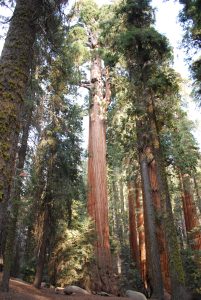 In a heavily wooded lot, you may be tempted to reduce the number of trees to reduce competition, but remember that trees want to grow in forests. Trees are stronger and healthier in groups that include many young trees than they are as individual specimens. A few dead branches are not necessarily a sign of decline and imminent death; rather, it is just a tree doing what a tree does. Trees will self prune old and inefficient growth, which are shaded by higher branches or other trees. If the branches are small, think of it the same as leaf drop. If they are larger branches, hire a certified arborist to remove them.
The dead of winter is a great time to assess our trees when you can easily see the structure. If you have concerns about your tree, call a certified arborist to come out to look at the situation. Often, the best thing we can do for our trees is to perform pruning. This involves the normal pruning chores of removing any dead, damaged, or crossing branches. Additionally, some branches may need removal to create clearance from a nearby building. These pruning moves are fairly obvious, but to increase the longevity of our trees, structural pruning may be needed. Poor structure increases a tree’s susceptibility to being split or toppled during storms and high wind events. Structural pruning uses pruning cuts to train the tree to develop a tall, central trunk with small, well-spaced branches similar to how trees grow in the forest.
Structural pruning is best done on young trees, annually for the first 15 years of its life. Continue every two to three years during the next 15 years of the tree’s life and on an as need basis thereafter. Here are some guidelines.
MOST IMPORTANT: Encourage one dominant, upright trunk.
Remove bad branches, which are those that: have a diameter greater than 50% of the diameter of the trunk or those which form angles less than 45° with the trunk.
Create vertical and horizontal spacing between branches.
If you have a property that already has mature trees that have never received structural pruning, it’s not too late. Although it won’t make as much of an impact as when we start early, you can still improve a mature tree’s strength and safety with structural pruning. For this, you will want to hire a certified arborist.
So show your tree you love it by investing in a bit of tree maintenance. You will be rewarded by avoiding the costly mistake of removing a healthy tree.
