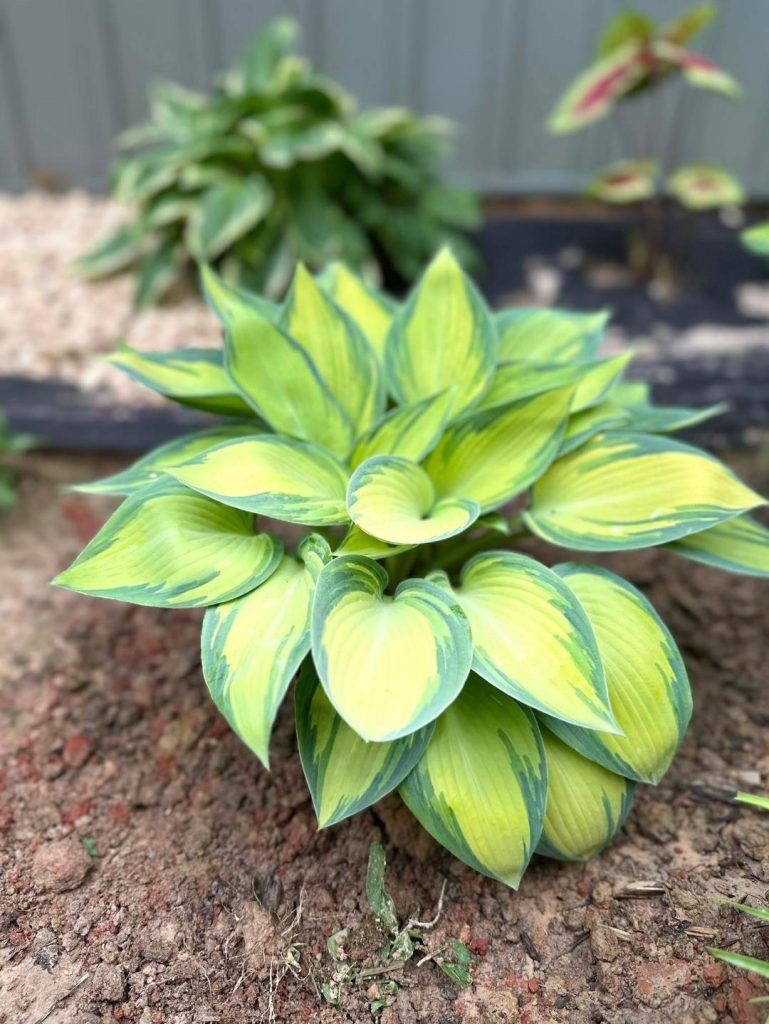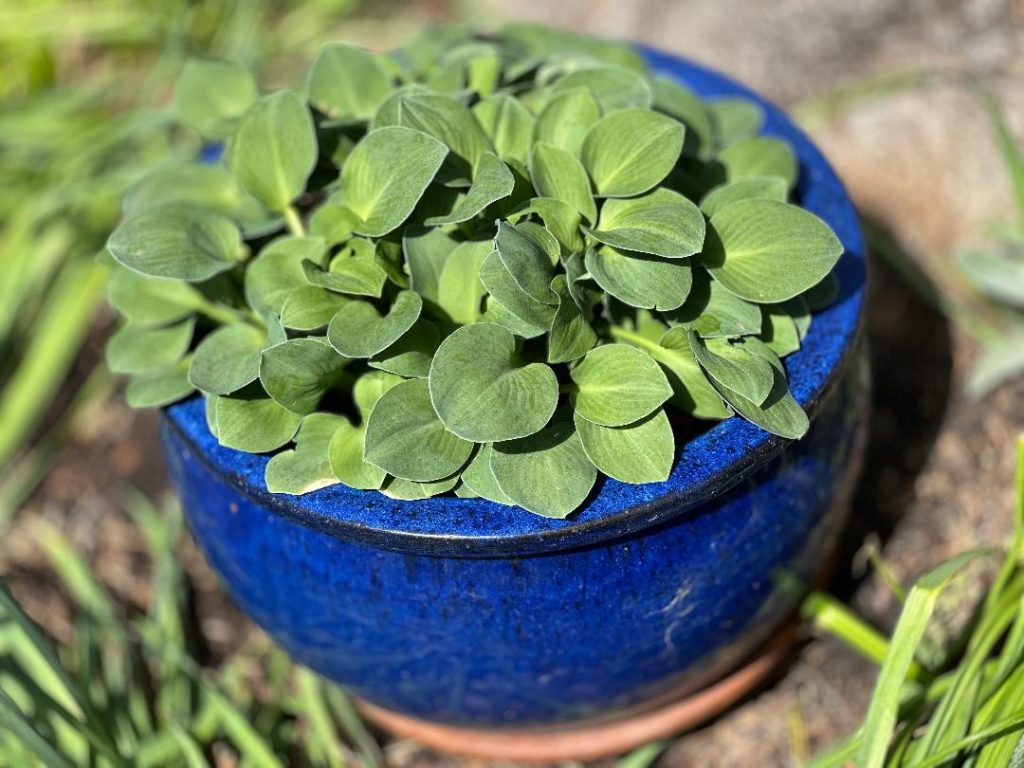
Our Hosta have pipped, flushed, and like peacocks are flashing their beautiful foliage at us. I love the brilliant early yellows of H. ‘Golden Falls,’ the deeply veined, stunning yellow of H. ‘Cerveza,’ or the petite blaze of H. ‘Munchkin Fire.’ How about those screaming red petioles of H. ‘Cherry Cheesecake,’ or the twisty purple blues of H. ‘Skywriter,’ or even the sweet little blue H. ‘Mouse Ears.’ My personal favorite is H. ‘Marilyn Monroe’ as she flashes me with her wavy white underskirts. I hereby admit that I am a shameless hostaholic!
Hostas are deciduous perennials, which means they die back in the winter. They are easy to grow and maintain if you provide dappled shade, good drainage, and moisture. Water, water, water during the summer months here in our hot and humid south. Plant in fertile, well-drained soil that has been enriched with organic matter. If grown in pots, be sure to use a good-quality potting mix with plenty of pore space for good drainage. A mainstay in shady areas, there are literally hundreds of varieties to choose from, and they pair up nicely with many companion plants such as ferns, caladiums, heucheras, begonias, Lenten roses, and more.
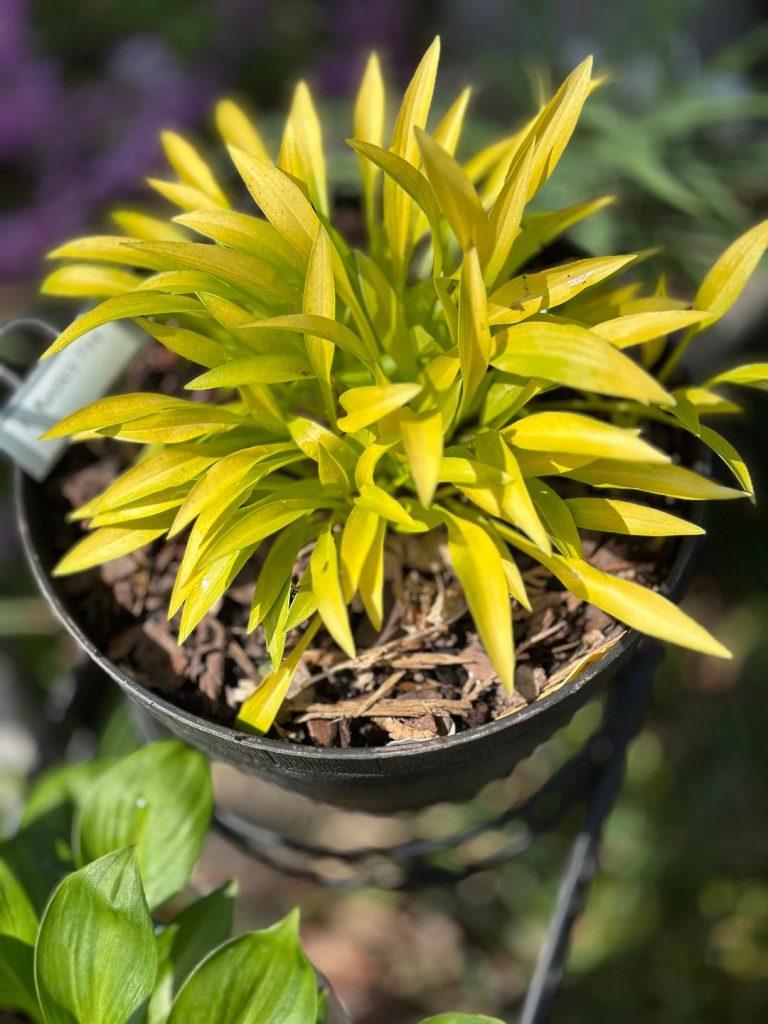
Hosta can be planted anytime, although I prefer early spring or early fall. This allows the roots to become established in cooler weather. You can fertilize at planting time and each spring with a timed-release fertilizer. However, less fertilizer is needed with the application of more organic compost and soil in your beds.
Hostas seldom need division and grow well without it. Remember, they peep, creep, and leap! They reach maturity at approximately 4/5 years. However, if you need space or want more plants, divide established clumps in early spring or early fall by cutting straight down between new crowns with a sharp spade or knife. Be sure to use clean cutting instruments so as not to spread disease. Replant at once, but expect a year or so to pass before the divided plants show good vigor. Divided plants may also be planted in pots.
Caution! Be extra careful when dividing plants. Watch for HVX – Hosta Virus X – which is a significant threat to Hosta plants. It causes various symptoms, including mottling, discoloration, and tissue collapse in leaves. HVX is highly contagious and can spread through infected sap, roots, or even animals. Symptoms of HVX include ink-bleed patterns on leaves, mottling and distortion of leaf shapes, and even tissue collapse in severe cases. If you suspect you have HVX in your garden, you should immediately remove infected plants along with their roots to prevent further spread. Be very mindful of regularly disinfecting all tools used for trimming or propagation to avoid sap transmission.
Also watch for foliar nematodes. Foliar nematodes (Aphelenchoides fragariae) are microscopic roundworms (0.5-1.0 mm long), that mostly live, feed, and reproduce inside the tender tissue of Hosta leaves. Typical symptoms begin as yellow discoloration in late June, indicating that the nematodes were feeding. Later, the affected areas develop into chocolate-brown streaks, islands, or wedges bordered by veins. The important clue to watch for is that the yellow and brown areas occur only BETWEEN veins and that the brown color can be seen on both the front and back sides of the leaf.
 Use good hygiene in the garden. When pruning, dividing, or cutting, clean all tools using 10% bleach solution before moving to the next plant. Another good practice is an irrigation system that is a drip-line rather than overhead sprinklers. Almost impossible, but try not to wet foliage while watering, as nematodes move in films of water outside of leaves and stems.
So, what is a deer’s favorite food? Hostas! Not only do we have to protect our hosta from HVX and foliar nematodes, but also from deer, slugs, snails, and voles. Cheap beer in shallow cups will drown the slugs, but why waste beer? There are slug and snail products on the market that are useful and not harmful to pets. Planting hosta in pots helps to deter the voles, but a good mouser cat is worth its weight in gold. Products such as Liquid Fence smell awful, but do help in moving deer away from your garden. You must remain vigilant. Deer are not easily deterred if hungry, and my garden is the local salad bar.
So, which hosta should you have in your garden?
- ‘June’ is a beautiful hosta everyone should have. A medium mound of gold-centered foliage with a wide blue-green margin. Leaves are ovate-shaped, slightly wavy, and pale bluish lavender flowers are produced from late July to mid-August.
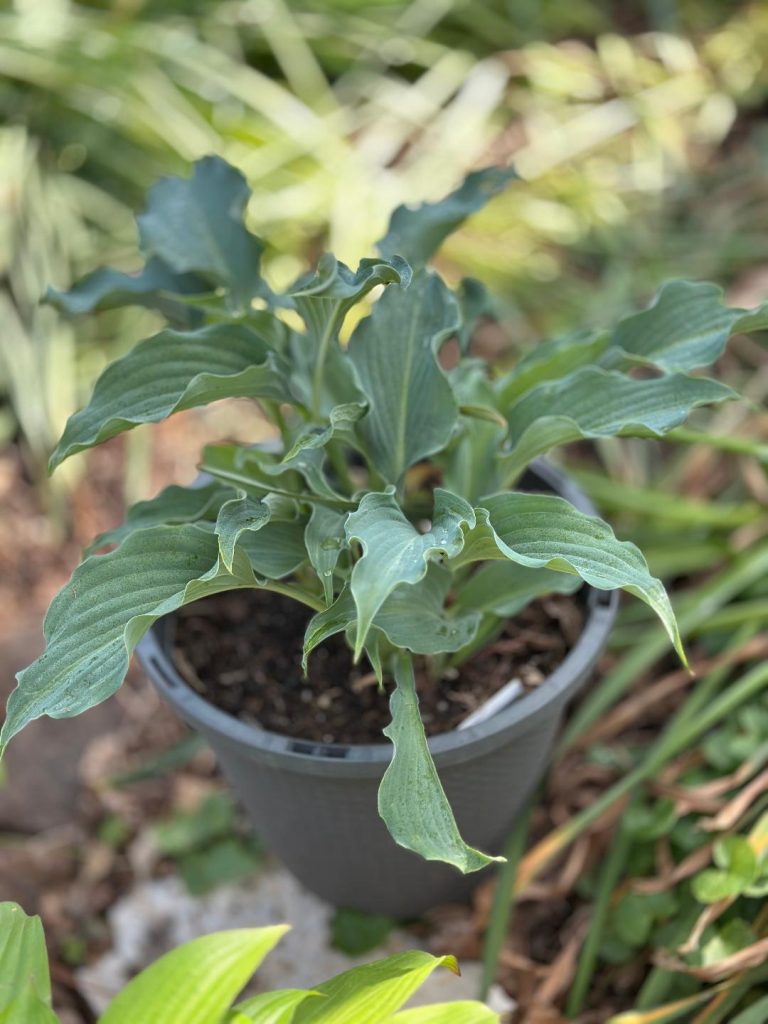
- ‘Jetstream’ is a large, fast-growing mound of deep blue, dark green leaves that are a bit corrugated and wavy. The Hosta Trail has a beautiful Jetstream planted in the demonstration bed.
- ‘Journey’s End’ is a large, very beautiful hosta with its gold-centered, dark, green-margined leaves, rippled, which produces white flowers from mid-June into early July.
I could list dozens of hostas that are worthy of your garden, but do your research. Shop around. Have fun! Buy from our local nurseries or order from reputable mail-order nurseries. Do not be afraid of bare-root hostas. Just remember to plant them right away and do not let the roots dry out. Buy hosta for their names, the beautiful colors, mini sizes, medium plants, or the gigantic monsters. Enjoy them, and please post your pictures for all to see. Are you a hostaholic too?