
How’s Your Back?
For folks of a certain age like myself, “How’s your back?” is a guaranteed conversation starter. At any given time, about 25% of adult Americans suffer from back pain, and 80% of us will experience back pain within our lifetime. Gardeners are a little unique as gardening is a great exercise that can strengthen our core to protect against back issues, so it is generally good for our backs overall, but it also has some very specific movements that can trigger pain—especially if we do it a lot or with poor technique. And digging is one of the highest-risk gardening activities for back pain.
There is hope, however, for the weary gardener because it is possible to garden without digging! For years, we had dug in the garden to incorporate organic matter, turn, and loosen the soil as we prepared our garden beds. Perhaps you would be interested to hear that this is totally unnecessary. It is possible to garden from the top down and let nature do the hard work for us. Even the big corporate farms are following no till practices. Today 20–30% of U.S. farmland is strictly no-till, with an additional 10% – 20% reducing tilling.
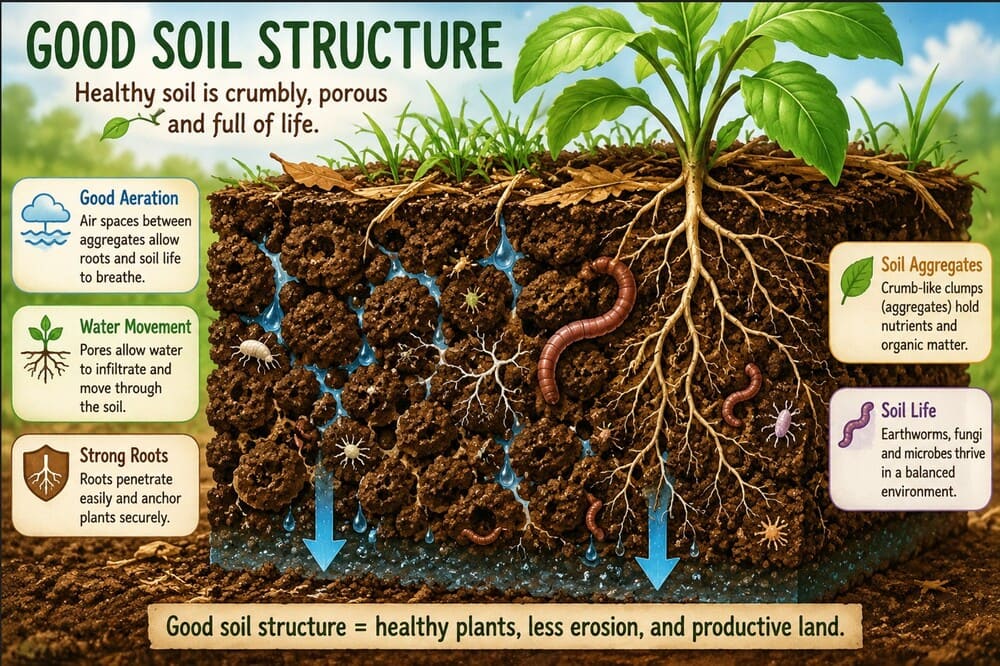
The move away from tilling the soil is driven by the benefits achieved through improved soil structure. By following nature’s example, we allow the worms and beneficial insects to break down organic matter and incorporate it into the soil for us, no digging required. When we harvest or clean up a garden, simply remove the top growth, leaving the roots in the soil. The top growth can remain on the surface as mulch, or for a tidier look, it can be taken to the compost pile. The roots remain in the soil to decompose. These roots are organic material already incorporated into the soil to be broken down by the soil life, no pulling or digging required! The decayed roots then become pathways for air and water penetration into the soil.
The microorganisms in the soil that are the last link in the decomposition of organic material make the nutrients available to the plant in a form that the plant roots can take up through the root hairs. When there is more organic material in the soil, this abundance of food allows for a higher population of microorganisms, and more nutrients are available to the plants. The more microorganisms in the soil also means that the organic material is more rapidly depleted. A soil high in organic material can produce more nutrients than the plants actually need, and the excess nutrients, especially nitrogen, can be leached into groundwater or lost in runoff water with detrimental effects. A natural equilibrium can be achieve by simply spreading organic material on the soil surface and nature incorporates it at a rate that maximizes soil nutrition levels without the boom and bust cycles that result from tilling the material into the soil.
So while more organic matter in the soil can benefit plants in the short term, it requires a constant input of additional organic matter to maintain that benefit. If it is artificially incorporated by tilling, it comes at the expense of soil structure. Good soil structure provides for improved water and air infiltration, better water retention, stronger root growth, greater resilience to weather extremes, and more! Most plants growing in soil with a good structure do not require supplemental nutrients. While some plants or crops will benefit from supplemental nutrition, it can be done without tilling. To assure that you have plenty of nutrients for your plants, you can use additional surface applied organic materials like shredded leaves, compost or, well rotted manures.
It is not that I am a lazy gardener, but I choose to no longer dig or till my garden beds. I intentionally choose to no longer destroy my soil’s structure and feed my soil in a more natural way. And my back thanks me.
