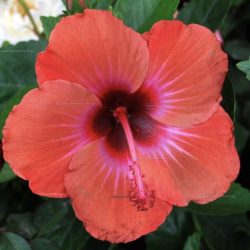
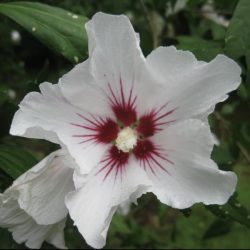
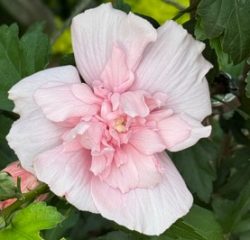
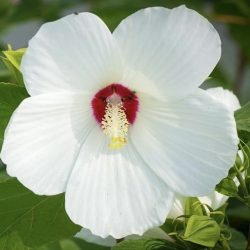
Hibiscus is a showy flowering plant grown for its large, colorful, tropical-looking blooms. The main types of hibiscus include tropical hibiscus (Hibiscus rosa-sinensis), which has glossy foliage and bright flowers and is best grown in containers or frost-free gardens; hardy hibiscus or rose mallow (Hibiscus moscheutos), a cold-hardy perennial known for huge “dinner-plate” flowers; Rose of Sharon (Hibiscus syriacus), a woody deciduous shrub often used as a hedge or landscape plant; and roselle (Hibiscus sabdariffa), an ornamental hibiscus grown for its edible red calyces used in teas, drinks, and jams.
- Plant of the Month: July 2026
Hibiscus
Home » Plant of Month » Hibiscus
Share this plant
| Common Name | Hibiscus, Tropical Hibiscus, Hardy Hibiscus, Rose Mallow, Rose of Sharon, Roselle |
| Scientific Name | Hibiscus rosa-sinensis, Hibiscus moscheutos, Hibiscus syriacus, Hibiscus sabdariffa |
| Native Range (area) |
Hibiscus plants come from several regions around the world. Tropical hibiscus is believed to be native to tropical Asia, while hardy hibiscus or rose mallow is native to the eastern and southeastern United States. Rose of Sharon comes from East Asia, and roselle is native to tropical Africa. |
| Varieties | For USDA Zone 8, some of the best hibiscus cultivars include hardy hibiscus varieties such as ‘Luna Red,’ ‘Luna Pink Swirl,’ ‘Luna White,’ ‘Lord Baltimore,’ ‘Lady Baltimore,’ ‘Perfect Storm,’ ‘Summer Storm,’ and ‘Robert Fleming’, which are known for their huge dinner-plate flowers and strong perennial performance. For woody shrub hibiscus, Rose of Sharon cultivars such as ‘Blue Chiffon,’ ‘White Chiffon,’ ‘Pink Chiffon,’ ‘Aphrodite,’ ‘Diana,’ ‘Sugar Tip,’ and ‘Purple Pillar’ are excellent choices because they bloom in late summer and work well as hedges, specimens, or vertical accents. Tropical hibiscus cultivars such as ‘Brilliant,’ ‘Seminole Pink,’ ‘President,’ ‘Painted Lady,’ and ‘Red Hot’ can also be grown in Zone 8 as summer container plants, but they usually need winter protection. For an edible option, roselle types such as ‘Thai Red’ and ‘Jamaican Red’ grow well as warm-season annuals and are valued for their red calyces used in teas and drinks. |
| Physical Description | Hibiscus plants have bold, often glossy or heart-shaped leaves and large trumpet-shaped flowers. Blooms may be single, semi-double, or double and can reach 4–12 inches wide depending on the type. |
| Benefits | Attracts hummingbirds, butterflies, and pollinators; adds strong summer color; useful as a hedge, specimen plant, container plant, or tropical accent. Roselle is also grown for edible calyces used in teas and drinks. |
| Requirements | Moderate to high. Hibiscus likes consistent moisture, especially during hot weather and flowering. |
| Care | Water regularly, mulch to conserve moisture, fertilize during active growth, remove spent flowers, prune lightly to shape, and protect tropical types from frost. Watch for aphids, whiteflies, spider mites, and Japanese beetles. |
| Colors: Bicolored, Lavender, Lilac Pink, Multicolor, Orange, Pink, Purple, Red, Salmon, White, Yellow |
| Bloom Times: Early Fall, Early Spring, Early Summer, Late Spring, Late Summer, Late Winter, Mid-Summer |
| Sunlight: Full sun |
| Soil Type: Well Drained |
| Lifespan: Annuals, Perennials |
| Foliage Type: Deciduous |
| Flower Type: Clustered, Shrubs |
| USDA Hardiness Zone: 6a, 6b, 7a, 7b, 8a, 8b, 9a, 9b |


