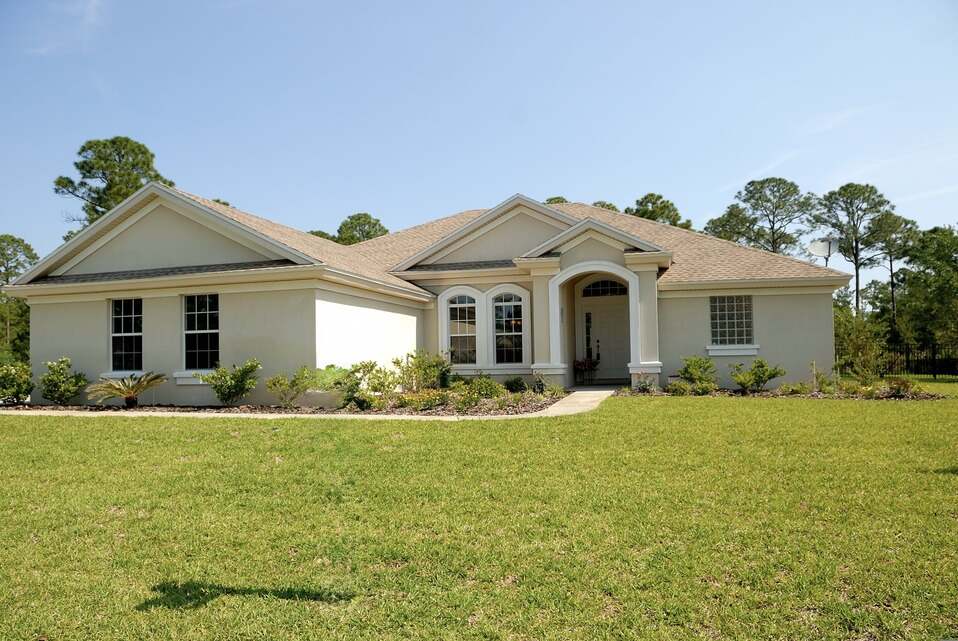
A Brief History of the American Lawn
How we got here—and where we might go next
It may surprise you to learn that the American lawn, as we know it today, did not truly exist before World War II.
Certainly, grand estates such as the Vanderbilt family’s Biltmore Estate featured sweeping grounds. But for most Americans, a “lawn” was something far humbler—and far livelier—than the closely cropped, chemically managed turf we recognize today. It was typically a mixture of grasses interwoven with clover and dandelions. It was not a monoculture. It was an ecosystem.
These pre–World War II lawns teemed with life. Clover fixed its own nitrogen from the air and enriched the soil naturally, eliminating the need for synthetic fertilizer. It stayed low—about six inches—reducing the need for mowing. It greened up early in spring and remained verdant through drought. Dandelions, with their deep taproots, loosened compacted soil and reduced erosion. They provided nectar for pollinators and, for centuries, nourishment for people—roots roasted as a coffee substitute, leaves eaten as greens, petals used in teas and wines.
The early American lawn was less an ornamental statement and more a shared green space. It supported insects, birds, and soil life. It required little intervention. It was not perfect—and it did not need to be.
Then came World War II, and with it, a cultural shift.
American soldiers stationed in Europe encountered the manicured landscapes of French châteaux and English manors. Returning home, many aspired to create their own version of that tidy grandeur. The Servicemen’s Readjustment Act of 1944—better known as the G.I. Bill—made homeownership attainable for millions. Before federal housing reforms under Franklin D. Roosevelt’s New Deal, mortgages required up to 50 percent down and repayment within ten years. Homeownership was out of reach for many. With federally backed loans, nearly eight million veterans purchased homes and, with them, suburban lawns.
At the same time, the chemical industry faced a postwar pivot. Companies that had produced wartime chemicals now turned toward consumer markets. Lawns became an opportunity. Through advertising and aggressive marketing, homeowners were persuaded that a “proper” lawn was composed of a single species of turfgrass—free of clover, free of dandelions, free of anything deemed a weed. Fertilizers, herbicides, insecticides, fungicides, irrigation systems: these became standard tools of lawn care.
By the 1960s, the modern American lawn was firmly established. Species such as Bermuda grass (from Europe and Asia), Zoysia (from Asia and Australia), and Kentucky bluegrass (native to Europe and northern Asia, despite its name) became dominant. None are native to most of North America. All require significant inputs—water, fertilizer, and chemical management—to maintain their uniform green appearance.
The result? A tightly mown, irrigated monoculture designed to remain green for part of the year, often browning during colder months. Beneath its tidy surface, biodiversity declines. Above ground, pollinators and insects find little sustenance.
Today, residential lawns in the United States cover an estimated 40–50 million acres—an area roughly the size of a small state. Maintaining this expanse requires vast quantities of fertilizer and water. Nitrogen, highly water-soluble, often washes beyond plant roots into groundwater and streams. Nutrient runoff—nitrogen and phosphorus in particular—travels down rivers such as the Mississippi, contributing to algal blooms in the Gulf of Mexico. As algae die and decompose, they consume oxygen, creating “dead zones” where marine life struggles to survive.
This is not merely a gardening issue. It is a water quality issue, a wildlife issue, and ultimately, a food security issue.
Yet history also suggests that landscapes evolve.
Across the country, a quiet shift is underway. Homeowners are reintroducing clover, planting native grasses, reducing lawn size, and incorporating pollinator gardens. The goal is not neglect, but balance—lawns that serve ecological function as well as aesthetic desire.
The American lawn has changed before. It can change again.
The question is not whether we are capable of reimagining our green spaces. It is whether we are willing to.