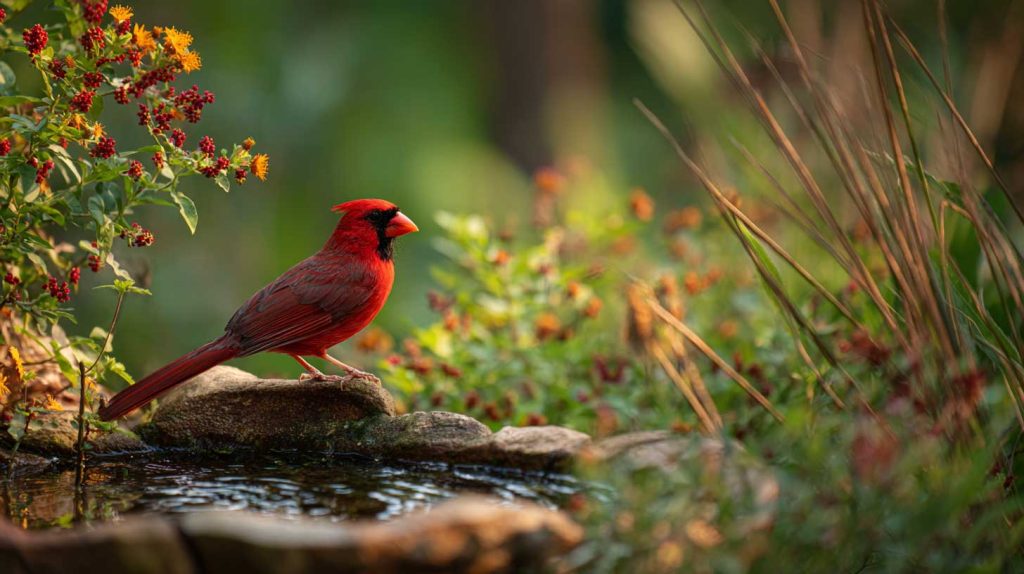
Backyard birds do not care about fancy seed blends or pretty packaging. They care about:
- high energy food,
- insects,
- native plants,
- clean water,
- safe cover.
- Most big box seed mixes are padded with cheap fillers that birds ignore.
- The smartest strategy is to feed specific high value seeds and back that up with native shrubs and trees that supply real food year round. Feeders help birds survive. Native plants help birds thrive.
Common Backyard Birds That Come to the Feeders
- Mostly Seed Eaters: Northern Cardinal, American Goldfinch, Mourning Dove, Chipping Sparrow, Song Sparrow, Field Sparrow, White throated Sparrow (winter), Dark eyed Junco (winter).
- Mostly Insect Eaters: Carolina Wren, Northern Flicker, Downy woodpecker, Hairy woodpecker, Carolina Chickadee, Eastern Bluebird, Yellow Bellied Sapsucker, Yellow Rumped Warbler (winter).
- Diet Generalists: Carolina Chickadee, Tufted Titmouse, White Breasted Nuthatch, Downy Woodpecker, Hairy Woodpecker, Eastern Bluebird, Blue Jay, Eastern Towhee.
Most birds shift diets seasonally. Even seed eaters rely heavily on insects during nesting season.
The Truth About Cheap Seed Mixes
Most big box blends contain fillers birds do not want. Birds eat sunflower seeds and toss the rest on the ground.
Common fillers include:
- Milo
- millet
- sorghum
- wheat
- oats
- cracked corn
- low quality peanut fragments
This wastes money, creates mess (and sprouts weeds), and attracts rodents.
If your yard is covered in uneaten seed, the mix is the problem, not the birds.
What Birds Actually Want to Eat
High value foods:
- Black oil sunflower: universal favorite, high fat, thin shell.
- Nyjer (thistle): essential for goldfinches and small finches.
- Safflower: loved by cardinals, disliked by squirrels.
- Peanuts and peanut hearts: huge draw for titmice, chickadees, and jays.
- Suet: winter fuel for woodpeckers and insect eaters.
- Mealworms: protein boost for bluebirds, wrens, chickadees.
Seasonal Feeding Strategy
- Spring (March to May): Birds are nesting and need protein: sunflower, mealworms, no melt suet, and fresh water.
- Summer (June to August): Offer light sunflower feeding, mealworms optional, and clean water. Too much seed in heat causes mold and disease.
- Fall (September to November): Energy loading season. Offer sunflower, safflower, and peanuts.
- Winter (December to February): Survival calories. Sunflower, sunflower hearts, suet, nyjer, mealworms.
Native Plants That Feed Birds
do far more than feeders. They support insects birds eat, produce berries and seeds, provide shelter, and offer nesting sites.
Berry Producing Shrubs
- American Beautyberry (Callicarpa americana): Bright purple berries in fall for cardinals, mockingbirds, thrashers, and robins. Thrives in partial shade and tolerates poor soils.
- Elderberry (Sambucus canadensis): Heavy clusters of berries that feed dozens of bird species. Blooms early for pollinators. Likes moist soil but adapts well.
- Chokeberry (Aronia species): Glossy shrubs with red or black berries that persist into winter. Excellent for thrushes, robins, and catbirds. Great fall leaf color.
- Blackhaw Viburnum (Viburnum prunifolium) and Rusty Blackhaw (Viburnum rufidulum): Red, blue, or black berries depending on species. Dense growth provides nesting cover. Extremely valuable for birds.
- Holly (Ilex species, including winterberry): Bright red berries persist into winter. Critical late season food. Plant both male and female plants for berries.
- Flowering Dogwood (Cornus florida), Stiff dogwood (Cornus stricta) and Silky dogwood (Cornus amomum): berries eaten by many species. Well drained, acidic soil in partial shade. Kousa dogwood berries are too large and tough for backyard birds – they mainly fall off and make a mess in August.
Habitat Shrubs, Vines, and Small Trees
- Spicebush (Lindera benzoin): Early flowers, aromatic leaves, and red berries. Host plant for swallowtail butterflies. Important insect support.
- Arrowwood Viburnum (Viburnum dentatum): Dense shrub with dark berries lasting into fall. Excellent nesting cover.
- Coral Honeysuckle (Lonicera sempervirens): choose the native vine (coral/red flowers), not invasive (Lonicera japonica: white/pinkish/yellow flowers). Nectar for hummingbirds. Berries later for songbirds.
- Serviceberry (Amelanchier species): Spring blooms for insects, summer berries for birds. Excellent small tree for urban yards.
Trees That Feed Birds and Insects
- Oaks (Quercus species): Insect superpower. Support hundreds of caterpillar species. Acorns feed jays, woodpeckers, and wildlife.
- Tulip Poplar (Liriodendron tulipifera): Large native tree. Seeds and insect support.
- Persimmon (Diospyros virginiana): Sweet fruit in fall. Major wildlife draw.
- River Birch (Betula nigra): Seeds for finches. Great for wetter spots.
Perennials: coneflowers, rudbeckias, sunflowers, blazing star, goldenrod, asters.
- Feeders help birds survive.
- Cheap seeds are more expensive and messy.
- Native plants help birds thrive.
- Water is as important as food.
- Insects are the foundation of bird life.
- Consistency matters: birds remember reliable (and clean) feeders.