
Add Layers for More Drama
All cake is essentially the same: a moist, tasty, soft. sponge layer enveloped in a wonderful frosting. It is the form of the cake that differentiates it and changes its identity. Cupcakes are great because they are portion-controlled, easy to grab, can be eaten without a fork or plate, and have a generous layer of frosting. Sheet cake can feed a crowd, is versatile in the piece size, which is easily adjusted for the number of people that show up and is often elaborately decorated.
However, for my birthday celebrations, I appreciate a layer cake. A layer cake takes cake to a new level: elegant, upscale, and expensive looking. There is a bit of mystery to a layer cake, as no one knows what is inside until the first slice reveals it. The multiple layers allow for more complexity of flavors as the filling between layers can be a different flavor of frosting, a jam, or a fruit curd. The texture is different due to the layers, especially when there are more than just two layers inside. The outer frosting can be applied decoratively and is usually enhanced with other embellishments.
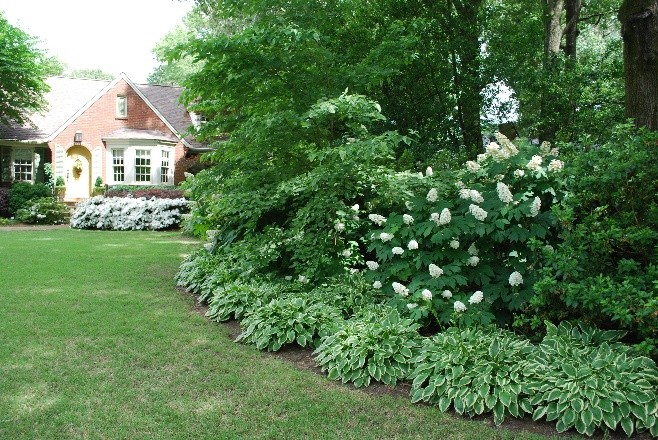
 Like cake, gardens come in many forms, each providing attributes that the gardener cherishes. But unlike cakes, no matter what form it comes in or the purpose that it serves, every garden will benefit from layers. I thought I could not fit another plant into my garden until I understood the beauty and benefits of a layered garden. Most urban and suburban gardens have a bit of layering already. The lawn serves as groundcover to prevent erosion and provides an area to use for sports or entertaining. It opens sight lines to provide for unobstructed views. Surrounding the house, you will often find a planting bed for annual flowers, herbaceous perennials, shrubs, a shade tree, or a smaller ornamental tree to add beauty and soften the transition from a flat lawn to the vertical walls of our homes.
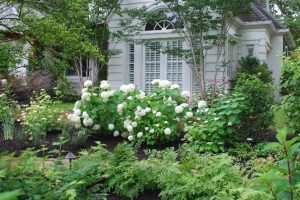 However, through thoughtful layering of our landscapes, we can do better than the ordinary, and by doing so, we will add to our curb appeal, reduce our landscape maintenance, save money, and support nature! The idea is to have a diversity of plant materials that complement each other. This is achieved by using plants with assorted colors, textures, heights, bloom or fruiting periods, and seasonal interest. They are arranged in beds with smaller plants to the front of the bed and larger ones toward the back. Each layer from the lawn and lower maintenance groundcovers to towering shade trees provides a habitat for nature’s bounty of wildlife.
The groundcover layer consists of low-growing plants that cover the soil surface, acting as a living mulch that helps reduce erosion and water runoff, improves moisture retention, and, as leaves are shed, decays to feed the soil. Groundcovers provide shelter for insects, invertebrates,and many of our small animal friends, like toads and skinks.
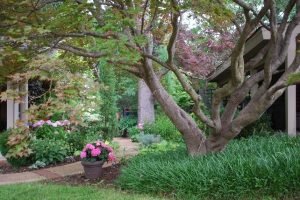 Lawns are groundcovers but are higher maintenance. Even if the lawn is filled with wildflowers such as clover, deadnettle, henbit, bittercress, dandelions, fleabane, and other “weeds”, it must still be mowed frequently. The meticulously pristine lawn many of us love requires significantly more care, regular feeding, and chemical treatments to eliminate weeds.
Perhaps the ideal groundcover stays low, is evergreen, suppresses weeds, and needs little care. Spreading monkey grass (Liriope spicata), clump-forming monkey grass (Liriope muscari), and their shorter cousin, mondo grass (Ophiopogon japonicus), as well as the yet smaller version known as dwarf mondo grass (Ophiopogon japonicus ‘Nanus’) come to mind. All forms can be contained by using a barrier that keeps the roots from escaping the space you designate for them. Ideally, it would extend 3-4 inches below ground and an inch or two above ground. Should you hate monkey grass because it is too common, there are numerous alternatives for both sun and shade.
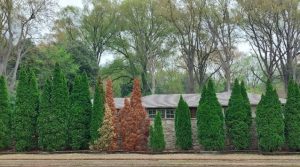 The shrub provides cover and nesting sites for birds and other wildlife. These plants often provide food sources like berries, fruits, and insects. This layer can act as a screen to block unsightly views and provide privacy. This layer is often subdivided into layers with small shrubs in front and large ones at the back. Rather than a single variety planted like a hedge, even in a formal design, a mix of varied species will provide additional interest through leaf texture, bloom time, as well as shape. In a single plant variety hedge, you can be disappointed if a single plant dies a few years down the road, leaving you with the aesthetic equivalent of a smile spoiled by the gap of a missing tooth.
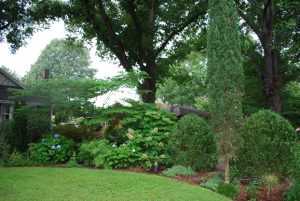 The tree or canopy layer has many of the same benefits to wildlife as the shrub layer. And like the shrub layer, it can be subdivided into smaller stature trees that fit into smaller landscapes and often have great ornamental value. These smaller trees fill the understory and thrive on the edges of the forest beneath the taller shade trees. Trees capture sunlight and convert it to food for caterpillars and insects, which in turn feed our birds. Their leaf litter becomes home to more insects that live in the soil and work to decompose the fallen leaves.
You can add to your garden by adding layers. If you can see mulch, there is room for groundcovers to cover that area, or you can plant additional plants to increase the diversity of plants in your garden. If you have open space between the lower branches of your tree and the ground, there is room for both a shrub and a groundcover layer. For the serious gardener, expanding the width of your garden beds creates room for a missing layer.
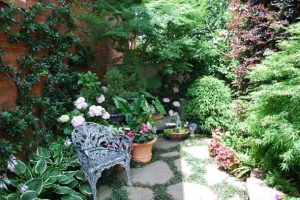 Even in a patio garden, you can create a more interesting display with layers. This can be as simple as using different height pots for growing your plants or elevating the plants by setting them on benches or tables. Window boxes can be attached to fences or a wall of your home that does not have a window. Consider a giant pot to grow a small tree or shrub. A trellis that supports a vine can provide height in a single season.
As my garden has matured, it has opened up the opportunity for additional layers. It happened slowly over the years, and I had not noticed the opportunity before me. The trees grew taller, the lower limbs had been removed. The shrub layer below had matured but was only 3-5 feet high,leaving a gap. I am working to add a layer of ornamental trees that I have planted among the shrubs that will give me a new layer and additional interest. I am also experimenting with some herbaceous perennials and bulbs as a groundcover layer to fill in some of the gaps between and underneath my shrubs. Thankfully, gardens are never finished, and we have the opportunity to evolve with them.
Celebrate your garden with layers, and you will raise it from ordinary to exceptional!
MAY Gardening Activities
Plant Annuals and perennials early in the month. Warm season vegetables (seeds and transplants), zinnia seeds. Continue planting gladiolas every 2 weeks for a succession of blooms. Choose and plant crepe myrtles in bloom so you can choose the desired color. Wait until night temperatures are regularly above 60ᴼ F before planting caladium tubers.
Lawn Care Seed Bermuda. Fertilize Bermuda and Zoysia lawns with complete fertilizer. Mow lawns approximately 2 inches high. Do not remove more than 1/3 of the leaf blade at each mowing. Consider using the mulching blade on the mower.
Prune Climbing roses at the end of the month. Early May is a good time to cut back any woody perennials that need it, such as rosemary, rue, lavender, and Artemisia. Prune spring-flowering shrubs (azaleas, flowering quince, Forsythia, and Loropetalum) soon after they finish flowering, but only if they need it. To keep them from looking like a meatball, follow the taller branches down into the shrub and cut just above a joint.
Other Water deeply during weeks with less than 1 inch of rain. Stake tall plants. Don’t let weeds get started in the garden — take control early with mulches and proactive management.
Take Hydrangea cuttings and let them root in coarse sand. Spray for leaf rollers that disfigure your cannas. For an organic approach, use products containing Bacillus thuringiensis (Bt). The nonorganic active ingredient Carbaryl, sold most often as Sevin, is very effective as well. Both should be sprayed only once the caterpillar is present and after each rain or when new caterpillar damage is noticed. Care must be taken to get the insecticide down into the rolled-up leaves where the caterpillars are feeding. Remove seed pods from bulbs and irises.
Events: Experience Memphis Gardens Kicks off May 1 and continues for 6 weeks. The Cooper Young Garden Walk portion of the event is particularly festive and runs for two days May 17-18. One ticket is good for all tour days, and it is free this year. Get to know your city from Soulsville to Collierville while experiencing remarkable gardens. Go to experiencememphisgardens.org.
