
Have you ever found zucchini squash or other produce at your front door in the morning? You may be the victim of reverse porch pirates. These are the neighbors whose garden is producing far more than they can hope to consume so they abandon some of the bounty at your door. They aren’t mean spirited they simply recall how delighted you were to receive some fresh produce at the start of the season and continue to bless you with this harvest. They are forced to leave it under the cover of darkness since you stopped answering the door after having exhausted your zucchini recipe repertoire three weeks ago.
I have found the bountiful harvest issue to be particularly true of herbs since they are used in such small quantities. If you grow enough for yourself there is enough for the neighborhood. I grow herbs for several reasons. They are easy to grow when given good drainage and Mediterranean herbs like thyme oregano and rosemary flourish on neglect. Since many herbs are perennial plants the return on the investment is fantastic considering the prices they get for fresh herbs at the grocery store. Herbs are also a great way to introduce children to gardening. They will be successful with their first plant and can start to enjoy it immediately without having to wait months for it to mature in the garden. They are also used in many of a child’s favorite foods like pizza and spaghetti.
Fortunately the bounty from your herb garden can easily be preserved without much effort or special equipment so none needs to go to waste and your neighbors won’t avoid answering the door when you knock.
Harvest, sort and wash herbs
Most herbs are at peak flavor when flower buds first appear, before they are fully open.
• Pick herbs in the morning, just after the dew evaporates and before the sun is hot.
• Discard bruised, soiled or imperfect leaves and stems.
• With the leaves on the stems, lightly wash in cool running water.
• Gently shake to remove excess water.
• Drain on paper towels.
Refrigeration
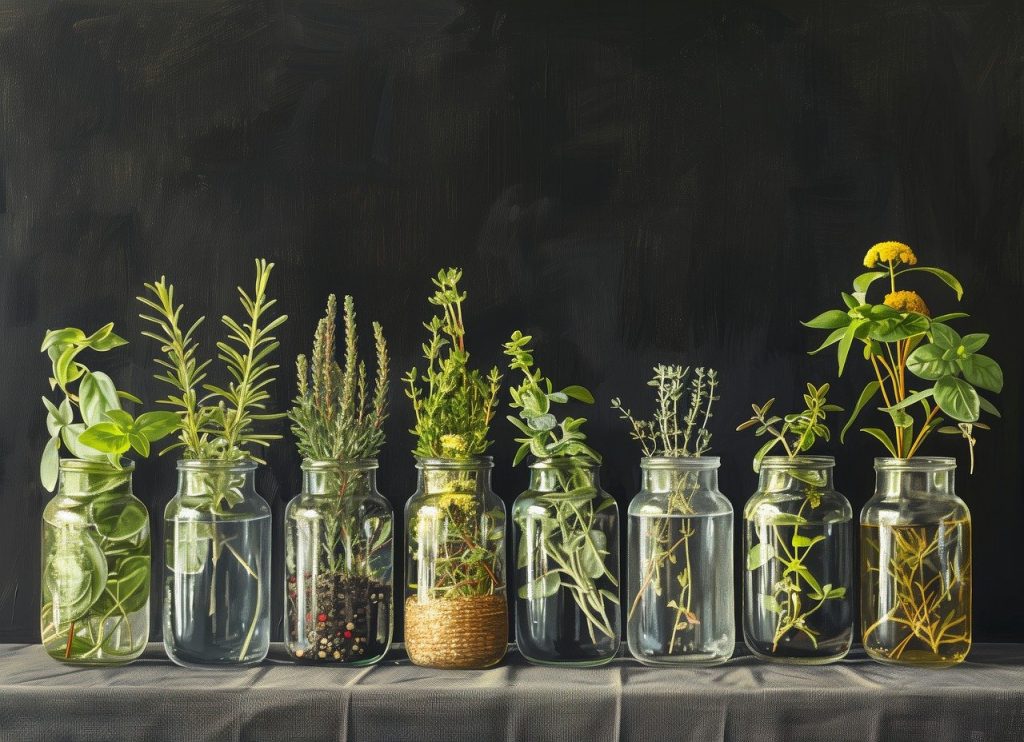
When cut fresh, herbs such as parsley, cilantro, mint, oregano and sage can last up to several weeks in the refrigerator. Place the herbs upright in a glass container of water, stripping any leaves off the stem if they will be below the water line. Cramming too many stems into the jar will cause premature decay — the leaves and stems need a little room to breathe. Alternatively, a mesh produce bag with a moistened paper towel also works.
Drying
For long term preservation drying is a good option. Dried herbs are 3 to 4 times stronger than fresh herbs. When substituting dried herbs for fresh herbs, a general rule of thumb is to use less dried herbs, about ¼ to ⅓ the ratio compared to fresh herbs. General Conversion: 1 Tablespoon fresh herbs = 1 tsp dried herbs = ¼ tsp powdered herb. The exception to this are the Apiaceae family: dill, cilantro and parsley. These all have a milder flavor when dried.
Indoor air or room drying is an option for sturdy herbs like rosemary, sage, thyme and parsley. Stems of herbs such as mint, sage or thyme can be tied in a small cluster and hung in a dry area with good air circulation. Tie stems together with a rubber band into a cluster. Hang herbs away from the sink, stove or dishwasher where there is a lot of moisture. An attic or garage are also suitable locations.
For tender herbs like basil, oregano, tarragon and mint with high moisture content, put herbs in a paper bag or a mesh bag with stems sticking out of the bag. Close opening with a string. If using paper tear or punch holes in the sides to allow air to circulate. Herbs are dry when leaves crumble and stems break about 1-2 weeks at room temperature. For faster results oven drying is an option. Remove the leaves and dry individually instead of drying whole stems. Spread washed leaves in a single layer on a shallow baking pan. Dry at temperatures of 110 – 130 degrees F for 3 to 4 hours. Stir herbs periodically until thoroughly dry. The microwave can also be used but to me they process is overly complicated prone to error and not worth the effort.
When drying is complete, to destroy any insects or insect eggs, heat the herbs or seeds at 160 F for 30 minutes or 175 F for 15 minutes or freeze at 0 F or lower at least 48 hours.
Place your dried herbs in airtight containers or jars with tight-fitting lids. Glass keeps aromas in. Store in a cool, dry, dark area, away from light and heat. Dried herbs keep their flavor and color three months in cupboards and up to one year in refrigerators or freezers.
Freezing
Frozen herbs tend to be limp when thawed, as the cell walls rupture due to the ice crystals; it’s recommended to use frozen herbs in cooked dishes, bread dough, herb butter or sauces.
- Chives and lemon grass should be chopped before freezing, as they are thin, freeze quickly and have a limper appearance when thawed.
- Leaves of larger herbs, such as basil and bay leaves, can be blanched for 15 seconds, placed in ice water and patted dry before freezing to stop enzyme reactions.
Dry Pack
Place leaves on a tray and freeze until frozen solid, approximately one-to-two hours. Pack into an airtight container. For herbs with sprigs, such as rosemary and thyme, place a few sprigs in freezer wrap or in an airtight freezer container.
Ice Cube Tray in Water
Chop herbs as you would if you were using them fresh. Fill an ice cube tray half full of water and place one tablespoon of herbs in each compartment. Freeze for 24 hours and then top off compartments. Freeze until solid, then place herb cubes in a freezer bag for storage. When you’re ready to use, add cubes straight from the freezer to the dish you’re preparing.
Ice Cube Tray in Oil
Chop herbs as you would if you were using them fresh. Mix two cups of herbs with 1/3 cup of oil.* Pour mixture into ice cube trays or four-ounce jelly jars. Freeze for 24 hours then place in a freezer bag. Note: Oil will not freeze solid like ice. It will be more malleable, allowing you to scrape out what you need. Do not store herbs in oil at room temperature; freeze right away.
