
Compost – Keep it Simple
When I went through the Master Gardener class, I realized that you don’t come out the other end as a gardening expert. The master gardener classes are just an overview that skims the surface of a multitude of gardening facets. When you graduate, you realize that you know very little, but the classes pique your interest to learn more.
Recently, I have seen ads for kitchen composters. These gadgets for your kitchen run on electricity and promise to turn your kitchen scraps into compost overnight! They look fantastic, but it seemed miraculous to me that you could achieve compost in such a short time. With my little knowledge of composting, I suspected something was off. I referenced my master gardener class handbook and a Composting for Dummies book I had purchased for my library. These sources confirmed my suspicion that something wasn’t right.
These machines, despite their claims, are essentially food waste choppers and dehydrators. The volume of your kitchen scraps is greatly reduced, and the end product is a dried, usually brown, fluffy material that looks like it could be compost. Unfortunately, it is not compost; it is pre-compost, just like the dried leaves of fall. There has not been any decomposition of this material. Of course, some brands of dehydrators will sell you an additional product that can be added to your waste that contains decomposition microorganisms, but the finished product still isn’t compost; it just has some added help to jump-start it once it is buried in your garden or added to your compost heap.
If you throw the end product into your trash, you would be sending fewer pounds to the landfill, but you would not reduce the organic content of the waste, and the same amount of greenhouse gases would be produced as it decomposes in the landfill. The only benefit to the planet is if you use the material in your garden. You can add it to your compost pile or simply bury it in your garden, but you could do the same thing with your scraps without dehydrating them first.
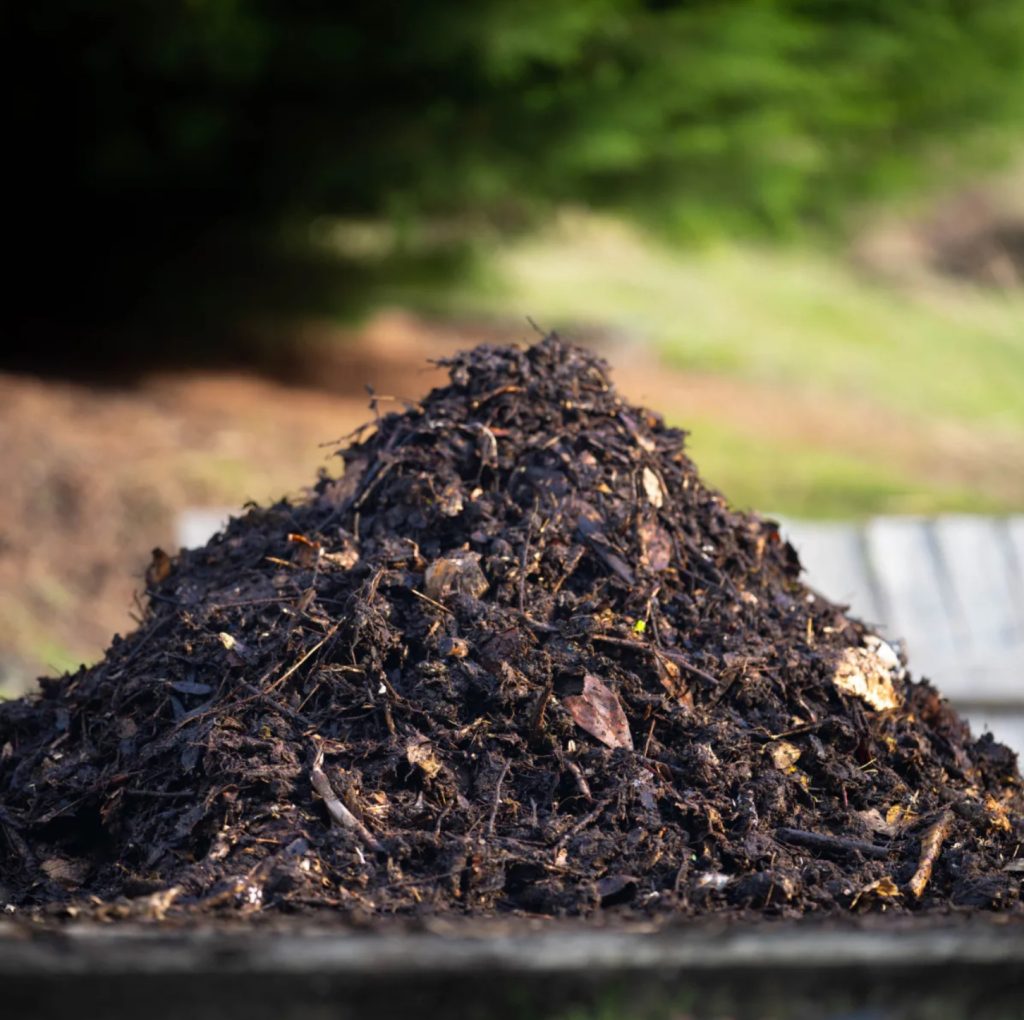
Compost is decayed organic matter in varying stages of decay. It is broken down by microorganisms and invertebrates. You can make your own compost easily by simply piling up kitchen scraps and yard waste in your yard, then wait for it to decompose.
Not everything in your compost heap will decay at the same rate. Sticks will take longer to decay than a lettuce leaf, and Bermuda grass clippings will decay faster than Zoysia grass clippings. Often, a gardener will sift their compost, leaving the least decomposed material behind in the pile for further decomposition. When it is finished, you should not be able to recognize any of the source materials that went into it. It should be dark brown or black and crumbly, and have an earthy smell.
Anything organic can be composted. Most sources, including TN Extension, recommend that you not use human or pet feces, as they may transmit diseases. Do not add meat, bones, grease, whole eggs, or dairy products, since they can attract rodents to the site. Also, adding weedy or diseased plants may cause later difficulties in the garden. If you treat your lawn with herbicides, think twice about using those grass clippings in your compost. Residual activity of the herbicide could be an issue when you use the finished compost in your landscape. If you really want to be green, consider using a mulching mower and leaving the clippings in the lawn. They will decompose to feed the soil and help suppress weeds. You should not have any issues with thatch buildup if you remove no more than 1/3 of the grass blade when cutting and do not see any clumps of grass on the surface of the lawn.
The simple compost heap can be a slow process. If you want to speed up the decomposition, you can turn your compost pile with a garden fork or shovel. The more often you turn it, the better. Turning helps aerate the pile and allows you to check on its moisture level. It should feel damp like a wrung-out dish towel. If it is too dry, it will slow the process, and if too wet, different microorganisms (anaerobic) take over, producing foul odors. Reducing the size of the material being composted also speeds up the process. You can do this by running everything going into the compost heap through a mechanical shredder, or in the case of leaves, you can run over them a few times with your lawn mower. If you want to get fancy, you can purchase or build your enclosure for your compost pile.
To kill weed or plant seeds, temperatures in the center of the compost pile need to reach 150 to 160 degrees F. This generally does not happen in a simple compost heap. To do hot composting, you need to monitor your compost much more closely and tend to it frequently. Monitoring the temperature of the compost will tell you if it is reaching the proper temperatures. Frequent turning is required to ensure that all of the material spends time in the center of the pile to reach the necessary temperatures. This is for the serious composter. If you want to keep a simple compost heap, just avoid adding weed seeds to your compost pile. You can add weeds, just gather them before, or soon after they have flowered, before they go to seed.
Purchasing a compost tumbler can make composting easier. Typically, tumblers consist of an enclosed container that can easily be rolled or flipped to turn the composting materials. Because it is enclosed, the contents are protected from rodents and other critters that might want to root through the pile. If it has the proper amount of moisture, not too wet and not too dry, it should be a great way to achieve relatively fast hot composting. These enclosed gadgets will also allow you to compost some of the forbidden organic items, like meat scraps. Having two of these bins allows you to be filling and turning one while the other is finishing its decomposition.
There are a lot of rules around the ratio of “greens” and “browns” that go into a compost heap. The terms are not related to the color of the materials but rather the amount of carbon they contain relative to nitrogen. Too much carbon in your pile, and it takes longer for the microbes to break it down. Too much nitrogen and your compost will give off an unpleasant ammonia smell. Too Much nitrogen can cause the compost to get too hot, which could kill off the microbes breaking down the materials, slowing the process. Just remember, food scraps (including coffee grounds), grass clippings, and rotted manure are high in nitrogen. Leaves, paper, and woody yard waste are low in nitrogen. A good starting ratio for a compost pile is 2 to 1 or 3 to 1 browns to greens, by volume.
Another popular method of composting is known as vermicomposting. With this method, you utilize worms to perform much of the work, resulting in a higher concentration of readily available nutrients and beneficial microbes compared to traditional compost. Red wigglers (Eisenia fetida) are the worms you use for vermicomposting. They naturally occur in the top layers of your garden, feeding on leaf litter and other organic materials.
They thrive in a temperature range of 55°F to 77°F, but can tolerate a wider range, from 40°F to 90°F for short periods. Temperatures above 95°F can be fatal, as can sustained temperatures below freezing. For this reason, many gardeners will keep their worm bins indoors. Unless you are married to my wife, who was creeped out by the idea.
When vermicomposting worms are kept in a closed bin or system that should be shielded from light and rain, with sufficient air flow, and a way to drain excess liquid. I had purchased a fancy worm tower and initially kept my worms outside, but they did not do well with our summer temps and cold spells during the winter. I then moved them into an unheated garage attached to the house. The worms did better, but some house flies decided that they should breed in the bin as well. Probably because I had filled the tray with too much material, which left a gap around the edge.
I gave up on vermicomposting, perhaps too soon. I hadn’t managed the bin as well as I should have. I used dried leaves for bedding and just tossed in my kitchen scraps with some additional leaves each time I fed my worms. My lady friends with their DIY indoor worm bins have had great success. But my male friends less so, as they also have wives who have banned indoor worms.
You can insulate your bins and move them to a sheltered area or temporarily to your garage to help keep your worms alive through the winter, but they will slow down and you will not be able to process as much material as when temperatures are optimal. The other option is the compost pile in the backyard. The worms will arrive on their own and will move deeper in the soil when necessary to try to maintain their preferred temperature range. They will enhance your compost but will not be the primary means of decomposition as in vermicomposting.
If you don’t have room for a compost pile or are not interested in composting yourself, you can still recycle your food scraps and yard waste through a community composting program. Here in Memphis, the Compost Fairy currently offers several options. Free drop off at one location. A monthly fee program where you drop off at one location and get some free compost back twice a year, and a curbside pick-up program is available in limited areas within the city.
Compost happens – You can generate compost by just maintaining a pile of food scraps and yard waste in your yard. If you are impatient or need a new hobby and are willing to fuss around a bit, try hot composting or vermiculture. If you only want to keep your food scraps out of the landfill with as little fuss as possible, you can work with a community composter or donate your scraps to a friend who composts.
AUGUST Gardening Activities
Plant: Start seeds of fall vegetables. Divide and transplant daylilies and bearded iris during the month of August.
Lawn Care: Continue to mow Bermuda and zoysia lawns at 2 ½ to 3 inches and fescue lawns at 3 inches. Mowing high conserves moisture, discourages weeds, and requires less frequent mowing than lawns that are kept short.
Fertilize: Roses to encourage new growth.
Prune: Too late to prune azaleas. Cut back annuals like impatients, vinca, and petunias to encourage fall bloom. Prune roses lightly and cut seed pods off crepe myrtles.
Other: Continue to water on weeks with less than 1 inch of rain. Continue to monitor for insect and fungal diseases and treat as needed. Keep hummingbird feeders and birdbaths clean and full.
