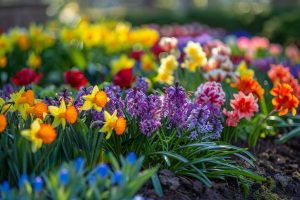
After a brutally hot and dry summer, fall has finally arrived! When I think of fall, I think of cooler temperatures, football, and of course planting bulbs for colorful spring displays. Fall and early winter are the best times to plant spring-blooming bulbs here in the Mid-South.
Some great options include alliums, crocuses, daffodils, and hyacinths. These bulbs require little maintenance, and many will multiply over the years. Depending on the species and cultivar, spring bulbs can bloom as early as January or as late as early summer.
To keep bulbs healthy for years to come, allow the foliage to remain until it has completely died back. This process lets the bulb store energy for the next season. Bulbs grow best in soil with good drainage and full sun to part shade. If the soil is too wet, bulbs may rot, and if they are planted in too much shade, blooms may be reduced.
As a rule of thumb, plant bulbs three to four times as deep as the bulb is wide. Shallow planting can expose bulbs to temperature fluctuations, resulting in small or no blooms.
Fertilizer is not necessary for bulbs that will only flower for one season, such as tulips. For perennial bulbs, a slow-release fertilizer can be added at planting. A soil test is always a good idea to determine what nutrients your soil may need.
Over time, bulbs will multiply, sometimes becoming overcrowded and producing fewer blooms. When this happens, dig them up, divide, and replant once the foliage has died back.
Spring-blooming bulbs add cheerful color to the garden while other plants are still dormant. If you are interested in learning more about which varieties perform best in our area, give me a call at 901-752-1207. I have a helpful publication to get you started.
Enjoy the fall, football, and happy planting!