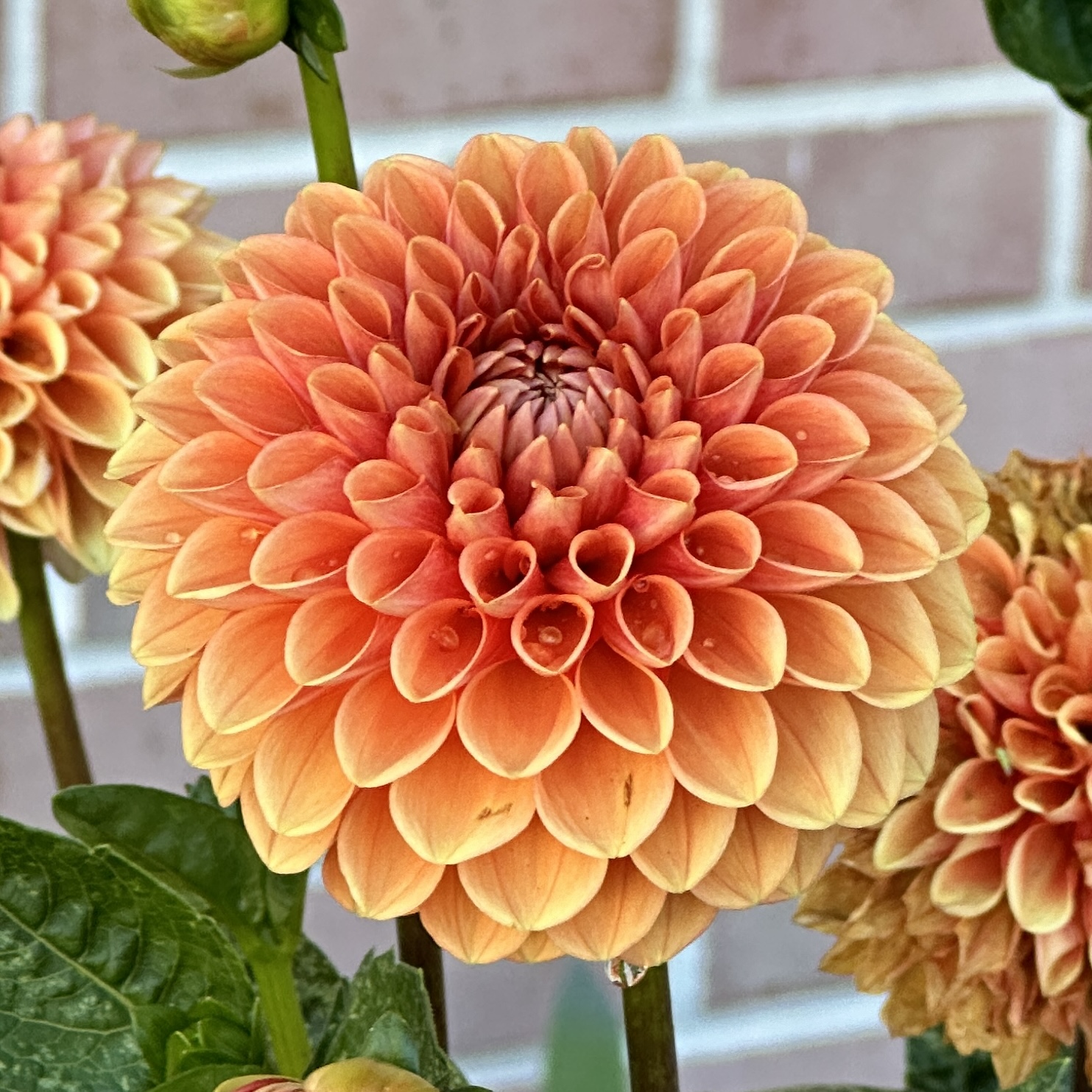
Dahlia (Dahlia pinnata)

Share this plant

Dahlias are beloved for their spectacular, showy blooms that come in a wide range of colors and forms. These perennial plants are often grown as annuals in colder climates and are prized for their long blooming season, which extends from midsummer to the first frost.

Common Name Dahlia
Scientific Name Dahlia pinnata
Native Range (area) Dahlias are native to the mountainous regions of Mexico and Central America. They grow naturally in a variety of habitats, from forested areas to open grasslands, typically at elevations between 1,500 and 3,500 meters (approximately 5,000 to 11,500 feet) above sea level. The Aztecs originally cultivated dahlias for their edible tubers and medicinal properties. The plants were later introduced to Europe in the late 18th century, where they gained popularity for their ornamental value due to their spectacular blooms.
Varieties Zone 8 provides a favorable climate for growing dahlias as perennials, given the mild winters and long growing season. Here are some recommended dahlia cultivars that thrive particularly well in Zone 8
  • Dahlia 'Bishop of Llandaff':
    • Description: Known for its striking dark foliage and vibrant scarlet-red, semi-double flowers.
    • Height: 3-4 feet tall.
    • Features: Excellent for garden beds and borders. Its dark foliage provides a beautiful contrast to the bright flowers.
  • Dahlia 'Cafe au Lait':
    • Description: Famous for its large, dinner-plate-sized blooms in creamy, soft blush colors.
    • Height: 3-4 feet tall.
    • Features: Popular choice for cut flowers and wedding arrangements due to its stunning color and size.
  • Dahlia 'Mystic Illusion':
    • Description: Bright yellow single blooms with dark, almost black foliage.
    • Height: 2-3 feet tall.
    • Features: Compact and bushy, perfect for containers and small gardens.
  • Dahlia 'Thomas A. Edison':
    • Description: Produces large, deep purple flowers that are very eye-catching.
    • Height: 3-4 feet tall.
    • Features: Great for adding a bold splash of color to garden beds and borders.
  • Dahlia 'Kelvin Floodlight':
    • Description: Known for its enormous yellow blooms that can reach up to 10 inches in diameter.
    • Height: 4-5 feet tall.
    • Features: Ideal for making a statement in the garden and for cut flowers.
  • Dahlia 'David Howard':
    • Description: Features deep orange blooms and dark bronze foliage.
    • Height: 3 feet tall.
    • Features: Compact and bushy, making it great for borders and container gardening.
  • Dahlia 'Arabian Night':
    • Description: Rich, velvety dark red to almost black flowers.
    • Height: 3-4 feet tall.
    • Features: Long-lasting blooms that are excellent for cutting and garden display.
Physical Description Dahlias are a diverse group of flowers known for their vibrant colors and varied forms. Here are some of the main types of dahlias, along with their characteristics:
  1. Decorative Dahlias:
    • Formal Decorative: These dahlias have flat, evenly spaced petals that are often blunt or slightly rounded at the tip. The blooms are full and symmetrical.
    • Informal Decorative: These have slightly twisted or irregular petals that give the flower a more relaxed appearance.
  2. Cactus Dahlias:
    • Straight Cactus: The petals are long, pointed, and straight, giving the flower a spiky appearance.
    • Semi-Cactus: The petals are not as pointed or as straight as the straight cactus variety, offering a slightly softer look.
  3. Ball Dahlias:
    • These dahlias have perfectly round blooms with petals that are rolled back, giving the flower a ball-like shape. They are often smaller and more compact.
  4. Pompon Dahlias:
    • Similar to ball dahlias but usually smaller in size. The petals are tightly packed and the flower has a very round shape.
  5. Single Dahlias:
    • These dahlias have a single row of petals, giving them a more simplistic and daisy-like appearance. The center of the flower is often exposed and prominent.
  6. Anemone Dahlias:
    • These have a single row of outer petals with a fluffy, cushion-like center, resembling anemone flowers.
  7. Collarette Dahlias:
    • These feature a single row of flat petals with an inner collar of smaller petals around the central disk, creating a unique and decorative look.
  8. Peony-Flowered Dahlias:
    • These have multiple rows of petals, somewhat resembling peony flowers. The center may be more open than in other types.
  9. Waterlily Dahlias:
    • These dahlias have broad, flat petals that overlap each other, resembling the shape of a waterlily. The blooms are usually large and symmetrical.
  10. Fimbriated Dahlias:
    • These are characterized by fringed or split petal edges, giving the flower a feathered or fringed appearance.
  11. Orchid Dahlias:
    • These have elongated, tubular petals that resemble the shape of an orchid flower. The petals are often rolled or slightly curved.
  12. Stellar Dahlias:
    • These dahlias have a star-shaped bloom with narrow, pointed petals that curve backward, giving the flower a star-like appearance.
Benefits
  • Long-lasting, vibrant blooms that enhance garden aesthetics.
  • Excellent for cut flowers and floral arrangements.
  • Attracts pollinators such as bees and butterflies.
  • Offers a diverse range of colors and forms for garden design flexibility.
Requirements Growing Tips for Dahlias in Zone 8 Planting:
  • Plant dahlia tubers in the spring after the last frost date, typically around mid-April.
  • Space tubers 18-24 inches apart to allow for proper air circulation and growth.
Sunlight:
  • Dahlias require full sun, with at least 6-8 hours of direct sunlight per day for optimal blooming.
Soil:
  • Plant in well-drained, fertile soil. Amend the planting area with compost or well-rotted manure to improve soil structure and fertility.
Watering:
  • Water deeply and regularly, especially during dry spells. Keep the soil consistently moist but not waterlogged.
Fertilizing:
  • Apply a balanced fertilizer every few weeks during the growing season. Avoid high-nitrogen fertilizers, which can promote foliage growth at the expense of blooms.
Staking:
  • Stake taller varieties to prevent them from falling over, especially in windy conditions. Insert stakes at planting time to avoid damaging the tubers later.
Deadheading:
  • Remove spent blooms regularly to encourage continuous flowering throughout the season.
Winter Care:
  • In Zone 8, dahlias can often be left in the ground over winter. Apply a thick layer of mulch to protect the tubers from any unexpected cold snaps.
  • If lifting tubers, wait until after the first frost when the foliage has blackened. Store tubers in a cool, dry place over winter.
Care
  • Water deeply and regularly, especially during dry periods.
  • Fertilize with a balanced fertilizer every few weeks during the growing season.
  • Stake taller varieties to prevent them from toppling over.
  • Deadhead spent blooms to encourage continuous flowering.
  • Lift and store tubers in frost-free areas over winter if grown as annuals.
Colors: , , , ,
Bloom Times: , ,
Sunlight: ,
Soil Type:
Lifespan:
Flower Type:
USDA Hardiness Zone: , , , , ,
Scroll to Top

Stay in the Know

Get Gardening in the Mid-South, plus important updates from the Memphis Area Master Gardeners—including upcoming events, programs, and application announcements.

* indicates required