Hydrangea spp.

Share this plant

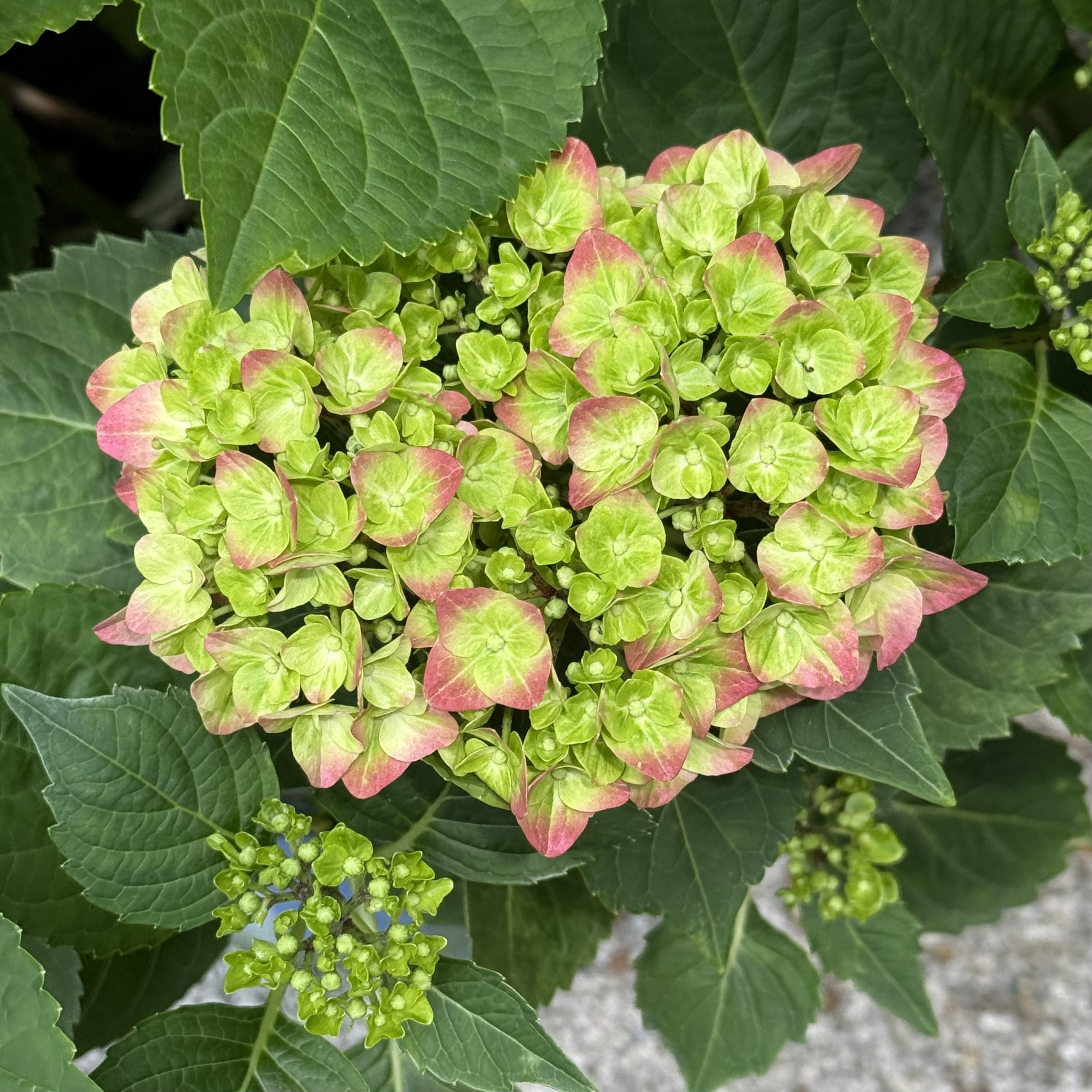
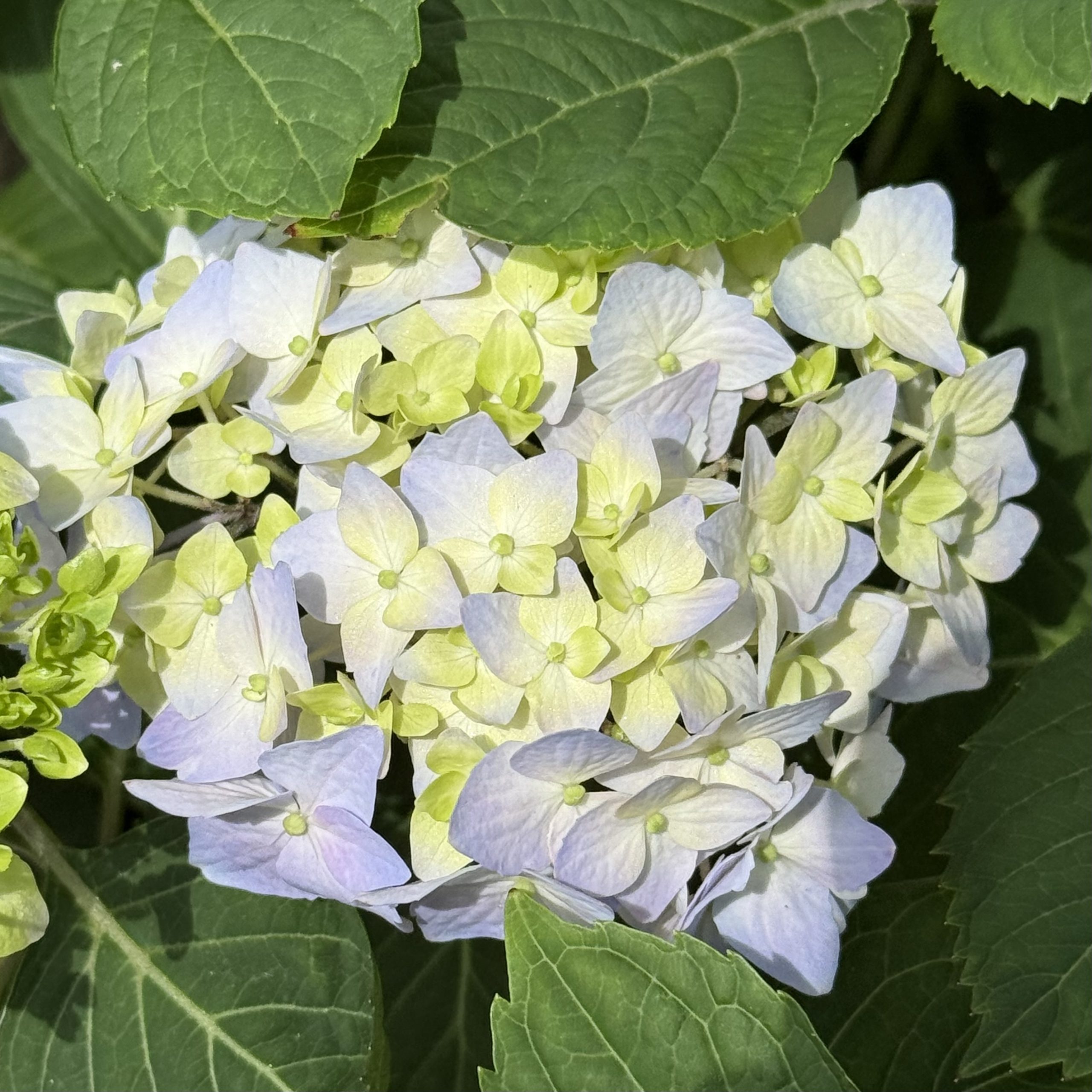
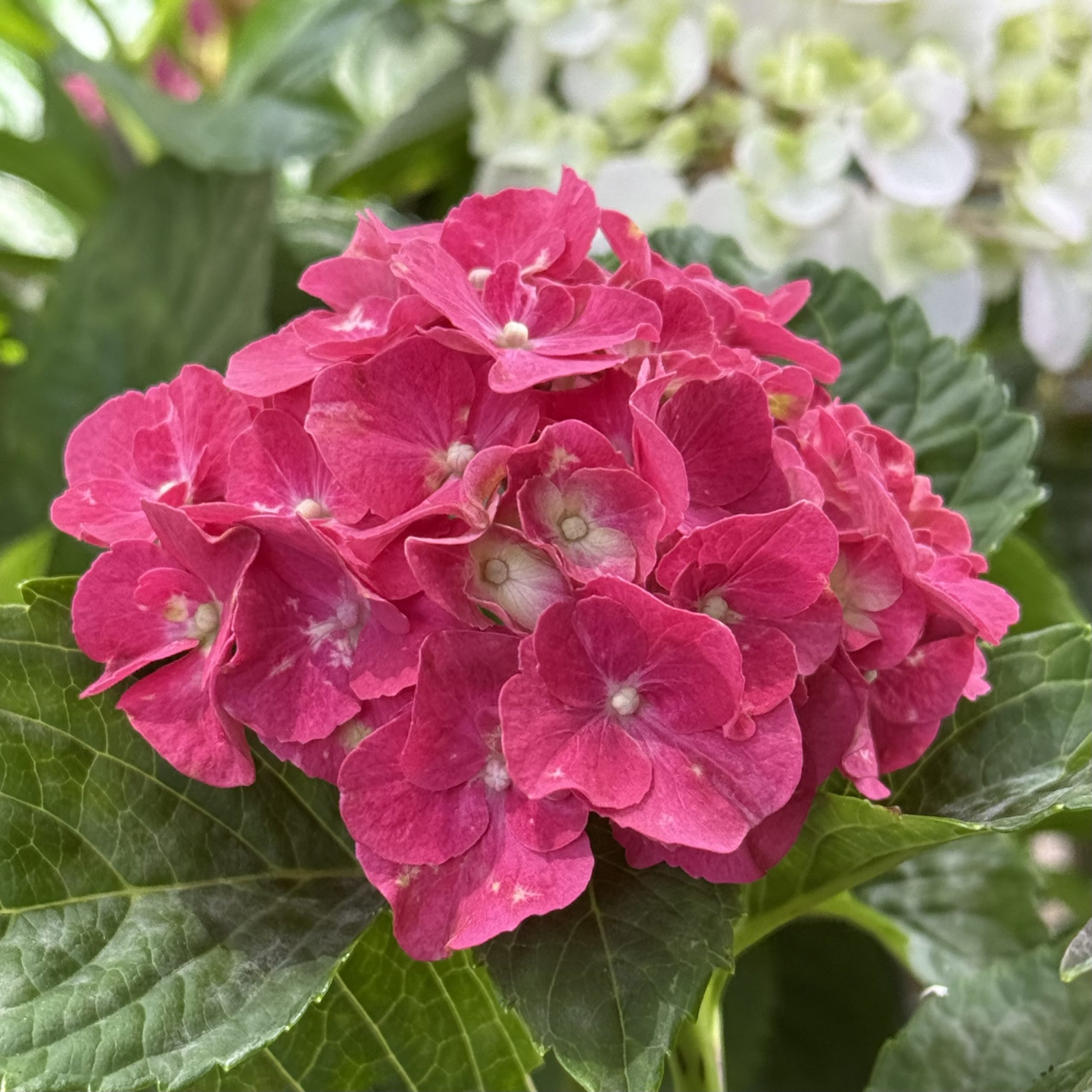
Hydrangeas are deciduous shrubs or small trees known for their dramatic floral displays and lush foliage. Their size and form vary by species and cultivar, typically growing between 3 to 15 feet tall and 3 to 12 feet wide. They have a rounded to mounded habit, often forming dense, bushy clumps.

  • Leaves:

    • Broad, ovate to heart-shaped, and arranged oppositely on the stem

    • Texture: Smooth or slightly coarse with serrated edges

    • Color: Deep green in spring and summer; some species like H. quercifolia (Oakleaf hydrangea) develop brilliant fall colors—reds, oranges, and purples

  • Stems and Bark:

    • Young stems are green and flexible; older stems become woody

    • H. quercifolia has exfoliating bark with cinnamon or tan tones, adding winter interest

  • Flowers:

    • Clustered in large, showy inflorescences (6–12 inches wide)

    • Flower heads can be:

      • Mophead (globular) – large rounded clusters (H. macrophylla)

      • Lacecap – flat-topped with a center of fertile flowers and a ring of showy sterile flowers

      • Panicle – cone-shaped clusters (H. paniculata)

    • Flower size and color vary with cultivar and soil pH (blue in acidic soil, pink in alkaline)

  • Root System:

    • Fibrous and shallow-rooted, which makes them sensitive to drying out but easy to transplant

Hydrangeas are prized for their architectural form, textural foliage, and bold flowers that persist on the plant and can also be used fresh or dried in arrangements.

Common Name Hydrangea
Scientific Name Hydrangea spp.
Native Range (area) Eastern Asia (Japan, China, Korea) and the Americas
Varieties

Varieties Suitable for Zone 8a:

  • Hydrangea macrophylla ‘Endless Summer’

  • Hydrangea quercifolia ‘Snow Queen’

  • Hydrangea paniculata ‘Limelight’

  • Hydrangea arborescens ‘Annabelle’

  • Hydrangea serrata ‘Bluebird’

Physical Description Hydrangeas are deciduous shrubs ranging from 3 to 15 feet tall depending on the species. Their showy flowers form large clusters (mophead, lacecap, or panicle types) in shades of blue, pink, white, or green. Leaves are usually ovate, serrated, and deep green.
Benefits
  • Long-lasting, ornamental blooms

  • Excellent for borders, hedges, and containers

  • Attracts pollinators

  • Some varieties are drought- or heat-tolerant

  • Acid-loving varieties change flower color based on soil pH

Requirements
  • Sunlight: Morning sun with afternoon shade (ideal for macrophylla and serrata); paniculatas tolerate more sun

  • Soil Type: Moist, well-drained, rich in organic matter; acidic to neutral pH

  • Water: Regular watering, especially in the heat of summer

  • Fertilizer: Light feeding in spring and midsummer (avoid high-nitrogen fertilizers)

Care
  • Pruning: Varies by type:

    • H. macrophylla and H. serrata: prune after flowering

    • H. arborescens and H. paniculata: prune in late winter or early spring

  • Mulching: Helps retain soil moisture and regulate temperature

  • Protection: In zone 8a, minimal winter protection needed; mulch base in late fall

Colors: , , , ,
Bloom Times: , , , ,
Sunlight: ,
Soil Type:
USDA Hardiness Zone: , , , , , , , , , , , , ,
Scroll to Top

Stay in the Know

Get Gardening in the Mid-South, plus important updates from the Memphis Area Master Gardeners—including upcoming events, programs, and application announcements.

* indicates required