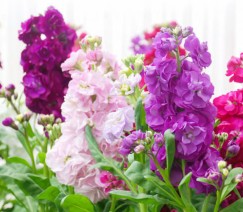

A cool-season flowering plant grown for its richly fragrant, densely packed flower spikes—excellent for beds, borders, containers, and cut flowers.

Home » Plant of Month » Matthiola incana (Stock Flower)
A cool-season flowering plant grown for its richly fragrant, densely packed flower spikes—excellent for beds, borders, containers, and cut flowers.
| Common Name | Stock, Common Stock, Gillyflower (sometimes) |
| Scientific Name | Matthiola incana |
| Native Range (area) | Matthiola incana (stock/hoary stock) is native to the Mediterranean region—especially southern Europe. Kew’s Plants of the World Online lists it as native to areas including Spain, France (incl. Corsica), Italy (incl. Sicily/Sardinia), Greece, Albania, and the NW Balkan Peninsula. |
| Varieties |
In Zone 8a, stock is usually grown as a cool-season annual (it tends to decline once consistently warm weather arrives). Missouri Botanical Garden notes it’s winter hardy roughly Zones 7–10, but often treated as a cool-weather annual where summers heat up. Here are reliable, commonly available options:
|
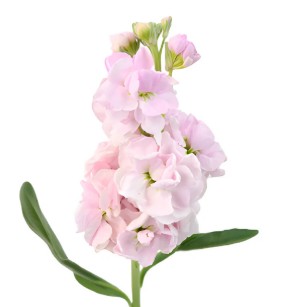
| Physical Description | Upright, clump-forming plant with soft, gray-green to green, slightly fuzzy leaves. Produces tall spikes of single or double flowers. Typical size: 12–30 in. tall and 8–18 in. wide (variety dependent). |
| Benefits |
|
| Requirements |
|
| Care |
|
| Colors: Bicolored, Burgundy, Cream, Pink, Purple, White |
| Bloom Times: Early Spring, Late Winter |
| Sunlight: Full sun |
| Soil Type: Well Drained |
| Foliage Type: Herbaceous |
| Flower Type: Annuals |
| USDA Hardiness Zone: 7a, 7b, 8a, 8b, 9a, 9b, 10a, 10b |