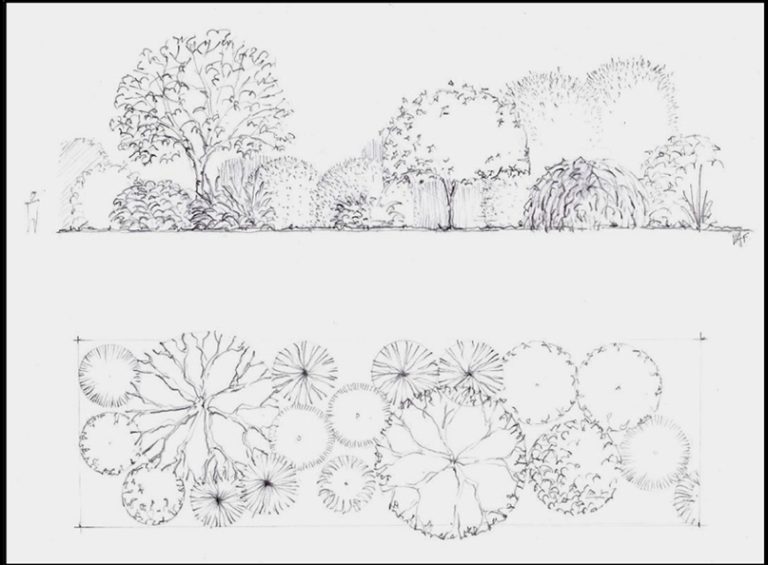
I recently attended a gardening program in which the conversation was centered on the use of plants as screens. One homeowner wanted to create privacy in her backyard by using different trees, shrubs and ornamental grasses as screens. Specifically, she wished to better understand the process of creating a beautiful yet natural privacy screen, which her family can enjoy for years to come.
The first consideration in designing a natural privacy screen is plant diversity. Plant diversity should include different heights and forms of plant material. For example, consider different forms of plants such as groundcovers, ornamental grasses, shrubs and trees. Incorporating layers of plants creates greater visual interest and establishes a habitat for wildlife, beneficial insects and pollinators.
It is best to choose a variety of different plant materials for your privacy screen rather than using the same species of plants. Using different plants for screens allows for more resilience against disease and insect pests. Consider the use of native plants and avoid use of invasive ones.
Create a mixed screen that has an attractive appearance. Use larger plants as a backdrop with medium height plants in the front and groundcovers or ornamental grasses as a border around the perimeter. Mixed plantings provide some assurance that if one plant develops problems, you will not lose a whole row of plants to the same issue.
If interested in the addition of a privacy screen I have just the resource for you! The University of Tennessee Institute of Agriculture website, uthort.tennessee.edu, is an excellent place to start your search for the ideal plants for privacy screens. First, go to uthort.tennessee.edu and click on Landscapes, then select Plant Selection. Under Trees and Shrubs, you will select Screen Plants for TN Landscapes. This publication contains a list of screen plantings that grow well in this area. In addition, you will find cultivar names, height x widths, light requirements and notes about each plant. Take the time to research these plants to become more familiar with their required growing conditions. This will enable you to decide if they are suitable for your location.
Consider incorporating a privacy screen into your landscape’s design, as these are both beautiful and functional. Integrating different plants into a wall that has an abundance of texture, form, and color is an innovative privacy solution. As always, I am happy to assist you! Please give me a call at 901-752-1207 if you have any questions.
Photo Credit: UTHort – VAF