
The Grass is Always Meaner
In Memphis, the favored lawn grass is either Zoysia or Bermuda, and both of these grasses seem to grow best where we don’t want them – in our ornamental beds. It has been brutally hot this summer, and there have been many days that I simply had to limit my time outdoors. For many gardeners, the heat has kept us from the task of weeding our landscape beds. It is frustrating and disheartening once you do venture outside to beds full of grass that is difficult to eradicate. So what is a gardener to do?
We don’t have to give up, eliminate our beds, and grow “wall to wall” grass on our property. We can solve the problem of grass in our landscaped beds with good cultural practices and, if needed, some interventions. It helps to understand how these grasses end up in our beds. Both Zoysia and Bermuda grasses spread aggressively through two specialized stem systems. Stolons, sometimes called “runners,” are stems that travel above ground, and wherever their nodes touch the ground, they will root to form new grass plants. The other is called a rhizome, which is an underground stem that periodically will push new shoots up to the surface. Bermuda is a more aggressive spreader than Zoysia, making it easier to keep in check.
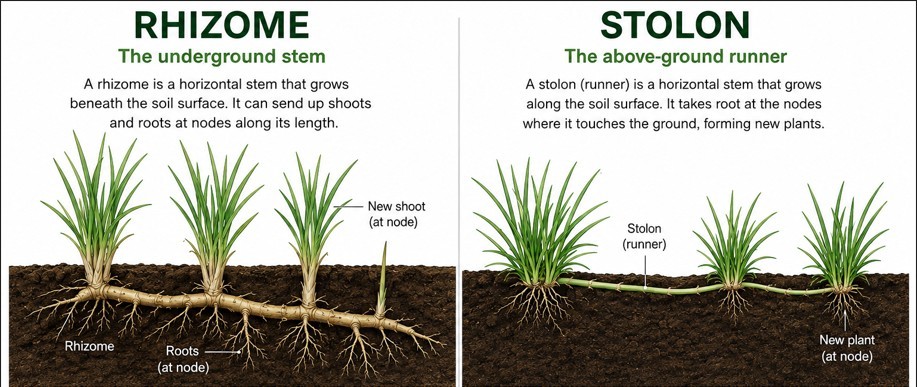
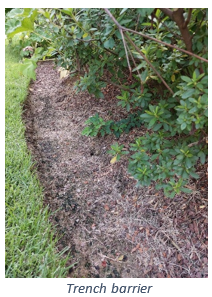
To keep these grasses out of our beds, a physical barrier is the best defense. When installed, the barrier should extend below ground to defeat the rhizomes. Bury the edging six inches deep for best results. You can get acceptable results at a depth of three to three and one-half inches. Leave the top of the barrier about an inch or two above the soil level. The buried portion will keep the rhizomes at bay, and the exposed barrier gives you a surface that you can use to cut the stolons with a string trimmer as they try to climb over the barrier. For aesthetic reasons some gardeners prefer to use a 3-to-4-inch-deep trench rather than a physical barrier. This will also work well but requires more maintenance.
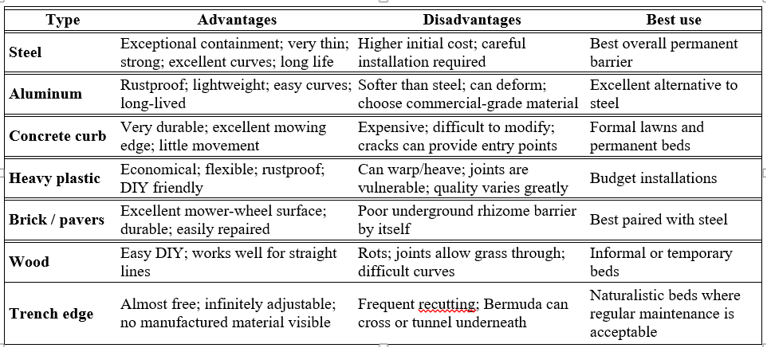
 When using a barrier consider adding a mowing strip. This is a hard surface installed on the grass side of the barrier to provide a path for lawnmower wheels to ride upon. When using metal, plastic, or non-mortared brick, be aware that where pieces are butted together, the grass will try to sneak through. Unfortunately, no barrier is 100 percent effective, and you will need to patrol the borders of your beds regularly, looking for intruders.
If grass has invaded your beds, you can remedy it by weeding it out, being sure to remove all of the roots and stolons. This is easy enough to do if it is just a few stray bits of grass among the mulch. When grass has invaded a bed of monkey grass, however, hand pulling is nearly impossible, so if you are not averse to using selective herbicides designed to kill only grass, you can restore your beds using chemotherapy. There are several to choose from.
Look for products containing the active ingredients clethodim, sethoxydim, or Fluazifop-P-butyl. All of them are systemic with a short term soil residual of about 2 weeks. These products work best on actively growing, young grasses. Established plants may need more than one application. These products are available under a variety of brand names. Your favorite local independent garden center can advise you as to which may be the best for your situation. As always, be sure to read and follow all label instructions.
Your grass doesn’t intentionally try to frustrate you; it just wants to reproduce and grow. We love it when it grows to fill in bare spots in the lawn. We just don’t love it when it fills in our beds. By using a barrier and patrolling the borders with our string trimmer, we can keep it out of our beds. And the good news is that should you take a long vacation to beat the summer heat, you can easily control it by weeding or by using a little help from the garden center’s chemotherapy section.
