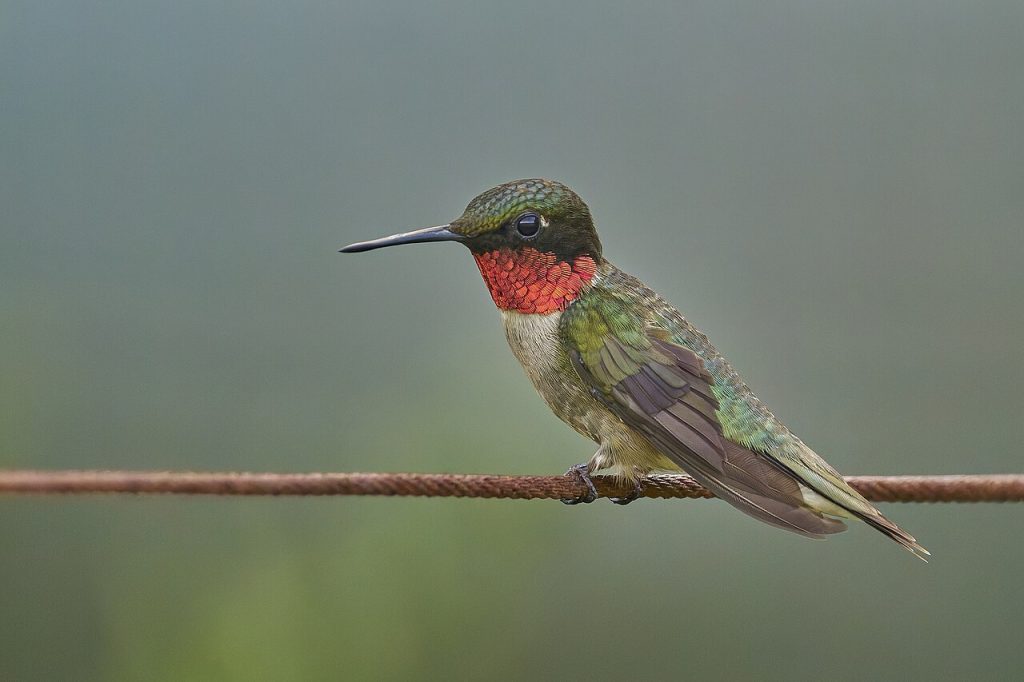
The Ruby-throated Hummingbird is the only hummingbird species that nests in Tennessee, and despite its size, it may be one of the most extraordinary creatures in your backyard.
Its scientific name, Archilochus colubris, is as poetic as the bird itself. Archilochus refers to an ancient Greek poet, evoking grace and brilliance, while colubris comes from the Latin word for “snake,” a nod to the bird’s long, darting bill and lightning-fast movements. Put together, the name paints a vivid picture: a graceful, shimmering creature that strikes with precision.
Even its common name—“hummingbird”—comes from the soft, steady hum of wings beating so fast they blur into invisibility.
Tiny Beyond Belief
A Ruby-throated Hummingbird weighs just 0.1–0.12 ounces—barely more than a penny. To put that in human terms, imagine weighing about as much as a single sheet of paper. Yet inside that impossibly small body is a machine running at extremes. Its heart beats 250–400 times per minute at rest, and can surge to 1,200 beats per minute in flight. At that speed, a human heartbeat wouldn’t sound like individual beats—it would blur into a continuous buzz. Their wings beat 50–80 times per second. Blink once, and they’ve already flapped more than a hundred times.
Built for Speed—and Survival
In normal flight, they cruise at 25–30 miles per hour, but during courtship dives, they can reach 50–60 mph. That’s the equivalent of a person casually jogging, then suddenly running at a full-speed highway speed. All of this demands staggering energy. A hummingbird must eat every 10–15 minutes, consuming up to half its body weight daily. Scaled up, that would be like a human eating over 100 pounds of food every day just to stay alive. To survive the night, they rely on a remarkable adaptation called torpor—a kind of controlled shutdown. Their body temperature drops, their heart rate slows dramatically, and their energy use plummets. Without it, they would simply starve before morning.
A Migration That Defies Logic
Each year, many Ruby-throated Hummingbirds fly over 500 miles nonstop across the Gulf of Mexico. For perspective, that’s like a human running multiple marathons back-to-back without rest, food, or water. And somehow—they make it.
Ingenious Builders
Their nests are engineering marvels: about the size of a walnut, built with plant fibers and spider silk. That silk allows the nest to stretch as the chicks grow—nature’s version of expandable design. A group of hummingbirds? That’s called a “charm.” How fitting.
Life in the Memphis Area
In the Memphis region, their year follows a predictable rhythm:
- Spring arrival: Late March, with peak activity from early April through mid-May. Males arrive first; females follow about a week later.
- Nesting season: Begins soon after arrival, peaking in May and June (sometimes extending into late summer). Females lay two eggs, incubate them for about two weeks, and raise the young alone.
- Fall departure: Males begin leaving as early as July, with females and juveniles following through August and September. Most are gone by late September.
(https://creativecommons.org/licenses/by-sa/4.0/)
Male vs. Female: A Study in Contrast
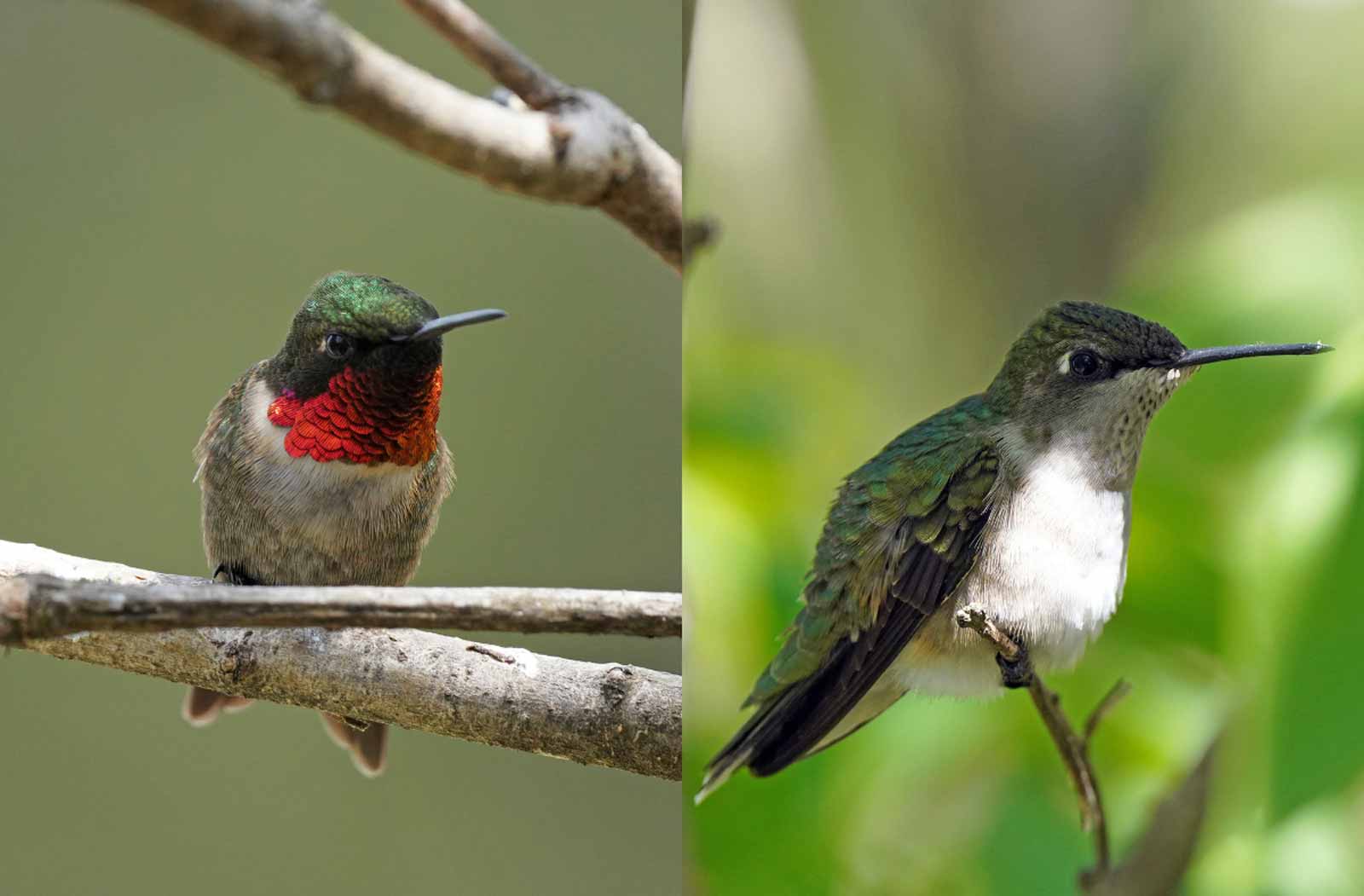
The male is unmistakable, with his brilliant ruby-red throat flashing in the sunlight. He’s territorial, bold—and notably uninvolved in raising young. The female, slightly larger but far less flashy, does all the work. She builds the nest, incubates the eggs, and raises the chicks. She is practical, efficient, and entirely self-sufficient.
What They Really Eat
Despite their love of nectar, sugar alone isn’t enough. Nectar provides only about 20% of their energy needs. The remaining 80% comes from small insects and spiders, which supply essential protein—especially critical for growing chicks. No insects means no baby hummingbirds – it’s that simple.
How to Support Them in Your Backyard
If you want hummingbirds to thrive, think beyond feeders. Feeders help—but they’re not the whole story. Use a simple solution of 1 part sugar to 4 parts water. Skip the red dye, and clean feeders every 2–3 days in warm weather. Moldy nectar can be deadly.
Native plants make the real difference. In the Memphis area, top choices include coral honeysuckle, cardinal flower, bee balm, trumpet vine, native salvias, eastern columbine, and jewelweed. Their tubular red and orange blooms are irresistible to hummingbirds.
Equally important are plants that support insects: native trees like oak and maple, shrubs such as viburnum and dogwood, and perennials like goldenrod and asters. These attract insects and create the protein supply hummingbirds depend on.
Support nesting naturally. Leave spider webs intact—they’re an essential building material. Avoid heavy spring pruning, and provide small branches where nests can be tucked safely.
The Biggest Threats
The greatest danger to hummingbirds isn’t lack of feeders—it’s a lack of insects. Mosquito spraying and pesticides wipe out insect populations, removing the primary protein source hummingbirds need. They also introduce toxins directly into the birds’ environment. A yard that’s been heavily sprayed may look pristine—but to a hummingbird, it’s a food desert.
Safer alternatives, like using standing water traps with mosquito dunks, target mosquito larvae without poisoning the ecosystem. Other hazards include window collisions, outdoor cats, and poorly maintained feeders.
What a Hummingbird-Friendly Yard Really Looks Like
It’s not perfect—and that’s the point.
- Layered plantings (trees, shrubs, flowers)
- Continuous blooms from spring through fall
- No pesticides or mosquito spraying
- Clean feeders
- A little natural “messiness”
Nature doesn’t thrive in sterile environments. Hummingbirds don’t either.
One Insight Most People Miss
If hummingbirds seem to disappear from your feeders during nesting season, don’t worry—they haven’t left. They’re simply busy. Feeding from flowers, hunting insects, and raising the next generation.
Learn More
For deeper, research-based information, see resources from the Cornell Lab of Ornithology, including All About Birds and Garden for Birds.