
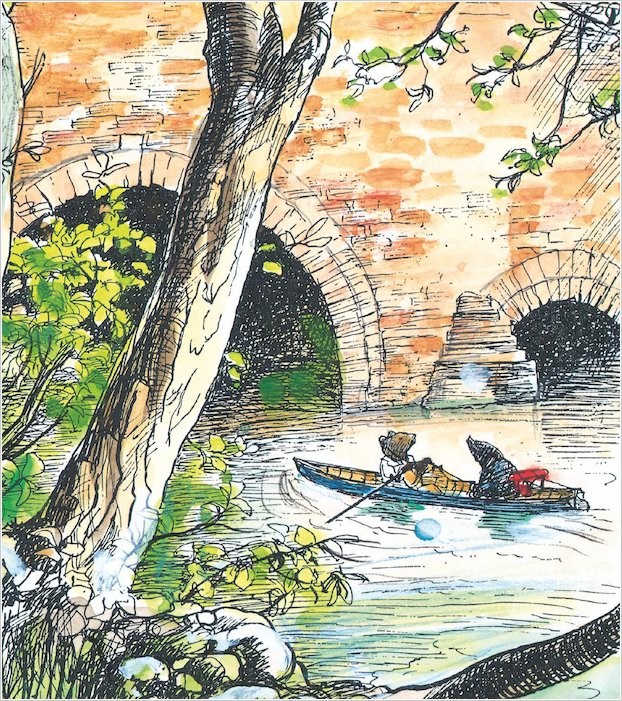
Moles and Voles: Adorable Monsters
 Wind in the Willows is a classic children’s novel by the British novelist Kenneth Grahame, first published in 1908. The story with anthropomorphized illustrations of a mole, a river vole, and their friends has been published with at least 14 different illustrators in various editions. Each one is more appealing than the last. You can’t help but fall in love with these creatures.
In real life, I still find these creatures to have a cute appearance. The mole is almost comical-looking, and the meadow vole has a short tail, making it less mouse-like and appear to be cuddly. However, in real life, I also believe these creatures can be monsters in the lawn and garden. Personally, I am much more tolerant of moles, but I have a real hatred of voles, which have destroyed many of my plants in the small area of the yard that gets some sunshine and is dedicated to perennial flowers.
To control or eliminate these pests, you should focus on the reason they are attracted to your garden and work to eliminate their food source. If that is not possible, you can take steps to protect your plants through physical barriers, try to repel them with deterrents, or focus your efforts on sending them to their final reward using traps.
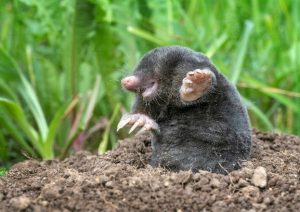 Moles: Are carnivores and feed on grubs, worms, and insects as well as decaying organic matter. Mole activity actually aids the gardener by consuming white grubs and other insects as well as aerating the soil. The issue is that as they tunnel across your garden, they lift the soil, uprooting plants and turf, causing them to dry out and die.
You can reduce their food source by treating the lawn with products to kill grubs. Milky Spore is a natural option. It contains spores of the bacteria Paenibacillus popilliae, which work specifically against the grub stage of the Japanese beetle. It poses no threat to people, animals, plants, or beneficial insects. When Milky Spore is introduced into the soil, it will lie dormant until grubs begin feeding on roots where the bacteria are. However, because it only works on Japanese beetle grubs, and we have had issues with moles in West TN far longer than we have had Japanese beetles, which didn’t arrive here until about 2010. It is not an ideal solution. There are, however, other chemical grub killers that will kill all types of grubs as well as other soil dwellers. Read and follow label directions closely before purchasing.
If you are able to get rid of the grubs, you will likely still have plenty of earthworms for them to dine on, but the pickings may be more plentiful at your neighbors, and they may move on to greener pastures. Generally, it takes a combination of approaches to rid your garden of this pest.
You can find several methods for ridding your garden of moles that people will swear have worked for them. Like most myths, there is just enough logic that makes these solutions seem plausible. However, mothballs, human hair, razor blades, or chewing gum in their tunnels will not work. Neither will using pinwheels or ultrasonic devices. Flooding tunnels or directing automobile exhaust down the burrows is useless. The reality is that these just do not work. Often, the reason they appear to have worked is that the mole moved to new territory or went deeper into the soil. When the ground dries out in the summer (or when it freezes in the winter), earthworms and soil-dwelling insects move deeper in the ground. The moles follow their prey and no longer make surface runs. We mistakenly attribute this disappearance to the success of our efforts, making control difficult because one can never be certain that the moles are truly eliminated. So, yes, it did appear that dancing naked at midnight on their tunnels was an effective solution that I swear worked for me and is the little-known secret to eliminating moles.
Mole repellents will require frequent applications to keep these pests away and may require more effort and cost than they are worth. The commercial products will typically contain extracts of the mole plant (Euphorbia lathyris) or castor bean, also known as castor-oil plant (Ricinus communis), which are known repellents. Both plants will grow here in West TN as an annual, which gets quite large in the landscape. The castor bean plant, in particular, is quite ornamental, and there are several named cultivars. They are sometimes grown near prized plants to act as a mole repellent, but use caution. Both are poisonous, especially their seeds, and should not be grown around pets or small children.
Traps are the best solution for moles, and this is the control method recommended by the University of Tennessee Extension. Killing baits are also available; however, should a natural predator (Owl, Hawk, fox, snake, cat, and dog) of the mole eat the poisoned critter, the poison can be passed to the predator, resulting in illness or death of the predator.
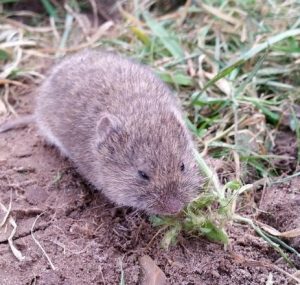 Voles are truly the insidious spawn of the devil. I have lost many plants to this herbivore that happily dines on the roots of plants. They are only about 3 inches long, weigh 1 ounce or less, but do an amazing amount of damage. They eat the roots of lawn grass, trees and shrubs, flower bulbs, and especially your favorite hostas! There are 23 species of voles in the U.S. The pine vole is the most common in the mid-south. They are active during both day and night, searching for food in a home range of about a quarter acre. They seldom venture into exposed places, using instead elaborate tunnel systems that create the all too familiar and unsightly raised ridges in your lawn. They may also use the tunnel system of moles, should they also be present in your garden.
You can discourage voles by making your garden less welcoming to them. Do this by eliminating ground covers. Keep lawns adjacent to flower gardens mowed to a short height to discourage voles from moving into gardens to feed. Minimizing the amount of mulch in your landscape. Mulch rings should be cleared back a minimum of 3 feet from the base of trees. Tilling the garden destroys the tunnels, which can help reduce populations. All of these practices, however, will invite weeds into your garden, and tilling will destroy soil structure and impact the roots of desirable plants. This is not an option for most gardeners.
Physical barriers to keep voles away from plants can be effective. One method uses hardware cloth, a welded wire mesh that comes in a variety of sizes. It is typically available at hardware stores with either a ½” or ¼” opening. Use the one with a ¼” to foil the voles. When creating a new bed, you can bury it 6-12” deep under the entire garden bed as well as wrap it up the sides and 12” above the surface to keep the vole from burrowing through into the garden and root zone of your plants. You can also use it to fence the perimeter of the garden. It should stand 12 inches high and should extend an additional 6-12 inches below ground. The underground portion should be bent in an outward fashion like an “L” extending away from the protected area another 3-4 inches. Alternatively can use it to make a wire basket out of the hardware cloth for individual plants, or purchase them ready-made.
Vole repellents will require frequent applications to keep these pests away and may require more effort and cost than they are worth.
Poisoned baits can be effective, but again, the risk of secondary poisoning to vole predators, birds of prey, foxes, snakes, and pets is reason enough for me to consider alternate methods of control.
The most effective and easiest method is an outdoor garden cat. Traps can also be very effective. The old-fashioned snap trap that you would use for mice baited with peanut butter will work. Place several near a vole hole and cover the traps with a bucket so it is the vole can remain hidden. The bucket also keeps birds and pets from being caught.
So if you are intolerant of these garden visitors, you can take action to discourage them from coming to your garden, exclude them from attacking your most prized plants, or mete out the ultimate punishment. Let your conscience be your guide so you can get a good night’s sleep after a day working in the garden.
JULY Gardening Activities
Plant Start seeds for cabbages, parsley, and collards. Replant summer color if needed. Consider succession planting of zucchini or later-season tomatoes.
Lawn Care For zoysia and Bermuda lawns, fertilize with a complete fertilizer and raise the height of your mower to reduce stress on your lawn and to conserve moisture in the ground. For best results, mow 2 inches for Bermuda grass, 1-2 inches for zoysia, and 2.5-3 inches for fescue.
Fertilize Perennial flowers and reblooming hydrangeas.
Prune Remove blooms from reblooming hydrangeas. Prune hydrangeas to shape if necessary by July 4th. Pinch back mums, chrysanthemums, and other fall blooming flowers. Continue to deadhead annuals and perennials. Cut back by one-third annuals that are getting leggy or out of control to keep them looking good into the fall. Give them a shot of a water-soluble fertilizer. Remove unsightly fern fronds. July is a good month to prune “bleeder” trees, such as maples, dogwood, elm, birch, and other trees that bleed when pruned in winter
Other Continue to water on weeks with less than 1 inch of rain. Continue to monitor for insect and fungal diseases and treat as needed. Keep birdbaths clean and filled with water.
Layering easily propagates many plants. Hydrangeas, viburnums, weigela, trumpet honeysuckle, Carolina jessamine, and climbing roses are a few plants that will root if the stems are fastened down and covered with soil.
The best time to harvest most herbs is just before flowering. This time is when the leaves contain the maximum essential oils.
