
By Tom Rieman
Most gardeners have sad stories of hard winters and the plants that they lost to winter injury. The winter of 2022-2023 will certainly be long remembered for the devastating damage caused by the one two punch of a flash freeze and a late freeze which virtually wiped out all of our cryptomeria, camellia, gardenia and rosemary. It also killed to the ground many other of our prized plants while simultaneously destroying the flower buds of many of our spring and early summer bloomers. Living in a transition zone between the harsh winters of the north and the balmy southern coastal states results in much heartache for gardeners in the Mid-South due to winter injury.
You can’t blame winter damage on the cold alone. Plants will easily withstand long periods of extreme cold temperatures as long as they have a chance to acclimate to the cold. In fact, the most damaging winter injury is due to extreme fluctuating temperatures. A “flash freeze” resulting from a cold front delivering frigid temperatures before plants have time to acclimate to colder temps in the fall is perhaps the most damaging. A mild winter however can cause some plants to begin to break dormancy. If followed by a mid or late season deep freeze it can have a similar impact. This kind of winter injury is due to rupturing of plant cells as ice crystals form. A fully acclimated plant will have dropped its leaves (if deciduous) and the plant cells undergo changes such as producing proteins that limit the size of ice crystals creating a natural anti-freeze.
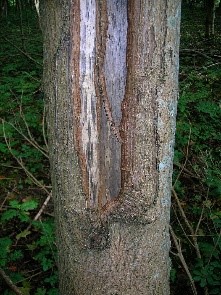
Another type of winter damage due to fluctuating temperatures is more subtle. Frost cracks appear as shallow to deep longitudinal cracks in the trunk of trees. Frost cracks most often occur on the south sides or west sides of trees because this area experiences the greatest temperature fluctuations between day and night. A sudden drop in temperature causes the outer layer of wood to contract more rapidly than the inner layer, which results in a long vertical crack at weak points in the trunk.
Similarly, sunscald is an elongated canker found on the trunk of thin-barked trees, such as dogwood, beech, maple, willow, white pine, and linden. It too often develops on the south or west side of trees following a sudden exposure to direct sun. In winter, the temperatures on the sun-side of the trunk may exceed air temperatures by as much as 20°F. Over time the bark slowly darkens, turns reddish-brown, and becomes rough. The callus tissue eventually cracks and falls away.

Wrapping of the young tree is a preventative for both of these types of damage. There are several types of tree wrap perhaps the best is polypropylene tree tape which is very stretchable and conforms to the trunk easily. Wrap the tree up to the first branch with white paper overlapping approximately thirty three percent each time around the tree. The white paper is effective in reflecting the heat of the sun off the tree. The paper should be applied after the tree has gone dormant for the winter and taken off soon after your last frost date before the tree becomes active again. Wrap from the bottom upward so that water sheds and is not trapped against the bark. An alternative is to paint the trunk white. It saves the effort of removing it in the spring but this may not be the look you want all summer. Once trees have developed their corky bark the threat of sunscald is no longer a concern and they do not need to be wrapped.
Ice storms cause damage by bending and breaking branches. Multi-stemmed evergreens, such as yews, arborvitae, and junipers, are often the most prone to damage. To protect these plants from limb breakage prior to an ice event, tie branches together loosely with strips of cloth or coated twine. Clearly tying is not practical for our trees and removing ice encased on branches can cause additional damage. Instead, allow ice to melt off naturally. Just enjoy the beauty of the iced branches as they glisten in the sunlight.
Winter burn can also be an issue for evergreens it appears as a browning or scorched leaf tip on evergreen foliage in late winter and early spring. Browning usually occurs from the tips downward. Winter burn is usually attributed to loss of water through leaf transpiration. Winter sun and winds have a drying effect. If the ground is frozen little water is available to replenish that which is lost. Applying an antidesiccant helps reduce transpiration and minimizes damage to the foliage. At least two applications per season, one in December and another in February, are usually necessary to provide protection all winter.
The plants most likely to suffer winter injury are those that are marginally hardy for the area or those already weakened by previous stress. With the official 2023 change of our zone from 7B to 8A some gardeners may try to push the zone and plant more tender selections. The change to our zone is minor (5⁰ F) and reflects the lowest recorded temperature on the coldest day over the last 30 years. It is recognizing historical data so if you have had problems with winter kill due to temperature alone you will not suddenly see any difference due to the designation change.
To minimize winter injury some simple practices will help. Of course resist your urge to grow marginal plants regardless of their beauty by selecting hardy species and cultivars. Avoid fertilization or pruning, from August until the first killing frost to avoid stimulating new growth. Water trees and shrubs, especially evergreens, during dry periods whenever the ground is not frozen. Use mulch to conserve soil moisture and insulate the roots from cold temperatures.
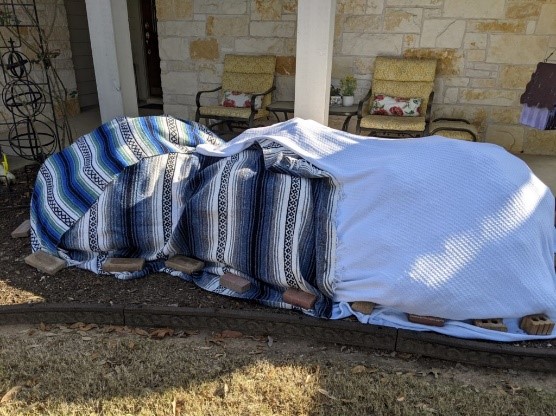
If a predicted frost or freeze is predicted and plants are not easily moved indoors, then they can be protected with coverings. Frost cloth and row cover materials are loosely woven. They work well for frost protection but will not be very beneficial in a freeze. Freeze protection can be done with sheets, blankets, towels, or cardboard boxes to help protect plants from low temperature injury. Plastic sheeting or tarps are not recommended. If plastic is your only option it should be supported by a frame and not touch the plant leaves.
The plant cover is intended to trap radiant ground heat. In order to do this the cover must extend to the ground and be secured so it will not be dislodged by wind. Wrapping the top of a plant, gathering and securing the cover to the trunk will not be effective.
Covers vary in their insulation characteristics, but they can generally add 3 to 5 degrees to the ambient air temperature so they are limited in their effect. Use of lights under the cover to generate additional heat can help if the lights are incandescent. LED lights do not generate enough heat to be worth the effort. Remove the covering the next day when temperatures get above freezing to provide ventilation and minimize the temperature fluctuation during the day.
The hard part comes in the spring when we must remain patient. Wait until the plant puts out new growth in the spring and assess the damage. If you are unsure if a branch needs to be pruned scratch the bark checking for a green layer of tissue. If you do not find any move further down the branch and repeat if none if found it is dead and should be pruned.
