
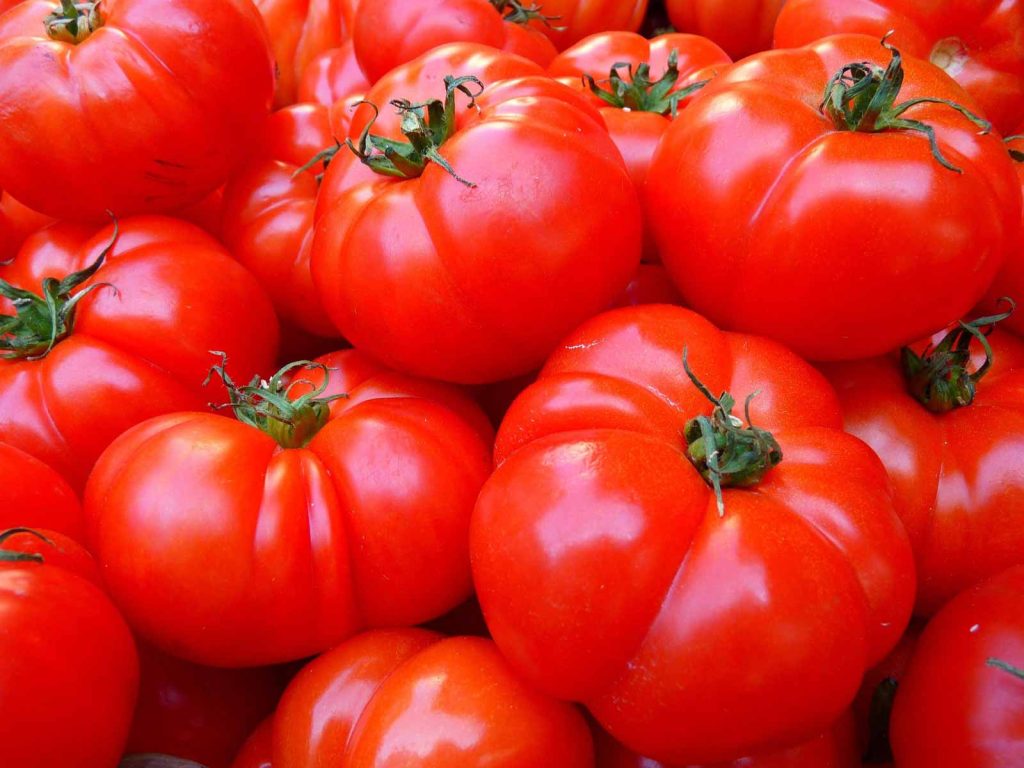
I confess, I am not a tomato lover. But I do enjoy them when they are smushed and cooked down into a sauce to be incorporated into recipes. There is no appeal for me to put a slice of tomato on a sandwich or pop a cherry tomato into a salad. I know for most of the rest of humanity this is just crazy talk. I do pay attention to other opinions and it appears that a fresh tomato in winter generally disappoints. Winter tomatoes seem to be more about looks and nutrition than taste.
I have heard many complaints that a store bought tomato in winter lacks flavor. This may be the reason that the tomato is the most often home grown food plant in America. I assumed that the winter tomatoes were grown in a green house and that was the reason for their lack of flavor. Their flavor however is determined by the variety grown, its ripeness stage when picked and storage temperatures.
Winter tomatoes can be grown in a greenhouse or grown traditionally in the ground. Many of our field grown winter tomatoes are grown in Florida which has the right temperature for growing tomatoes during the winter but that is about all it has going for it. The sandy soil, humidity, plant diseases and insects in Florida make it a terrible place to grow tomatoes in the field. If you pick them when fully ripe few tomatoes will survive shipping, handling and the time needed for distribution before going bad. In the 1950‘s agriculture advances made it possible to help tomato plants survive in Florida. Chemical pesticides, fungicides and fertilizers along with hybridized varieties for disease resistance gave growers the keys for success. Further hybridizing led to tomatoes uniform in size with the attributes needed for mechanical handling and long distance shipping. The final piece of the puzzle was the discovery of forced ripening. By exposing the tomatoes to ethylene gas, a tomato picked at the mature green stage would take on the desirable red color we expect in a tomato. For the first time, an affordable fresh winter tomato appeared in the grocery stores. Today California and Mexico also are major producers of field tomatoes for the winter market but they have more favorable growing conditions and soils which reduce their dependence on chemical controls.
When tomatoes are field grown for canning purposes they are grown on determinant vines. With this type of tomato vine all the fruit ripens at once. Machines then harvest the tomatoes by pulling up the vine, removing the tomatoes and hauling them a short distances to be processed. These tomatoes are grown in summer throughout the US in conditions that are best for tomato production. Tomato varieties grown are chosen primarily for flavor and yield. They are left on the vine until naturally ripened. This results in good flavor, low cost. They are immediate processed leading to excellent taste and the long shelf life that canned tomatoes and tomato sauces deliver. The winter market for fresh tomatoes however requires a different approach.
Field grown as well as greenhouse tomatoes for the fresh market are picked by hand because they are grown on indeterminate tomato vines that will continue and will be harvested several more times. They typically are picked at the mature green stage. At this stage they are hard green orbs that can stand a lot of abuse. Currently there is not a machine that can determine mature green stage and pluck the tomato from the vine. The mature greens are tough enough to be carted off and sorted by size and packaged by machines. The final step after packaging is to induce ripening by exposing them to ethylene gas. The final stage may be done just prior to shipping or when it has arrived at a regional facility. The tomatoes picked at mature green stage will not have the flavor consumers prefer.
In “protected agriculture” some degree of control over various environmental factors is used to grow the tomatoes. This ranges from simple shade-house structures on up to high technology greenhouses and hydroponic growing. There is no official USDA or other Federal definition outlining the requirements for a tomato to be labeled as “greenhouse.” However several states have regulations regarding these definitions. Greenhouse tomatoes generally have better cosmetic appearance and redder color than field tomatoes. The controlled conditions of a greenhouse allow for little need to spray to control disease or insects compared to open field tomatoes.
Winter tomatoes can also be picked at the vine ripe stage when the tomatoes are showing at least a tinge of red. At this point they will continue to ripen on their own and have reached their maximum flavor. Most of the higher end greenhouse protected agriculture production is picked when vine ripe. Picking at the vine ripe stage results in a better flavor but require more gentle handling and they have a shorter shelf life. Here the flavor is determined by the tomato cultivar. Tomatoes hybridized to stand up to the rigors of shipping long distances and picked when vine ripe will taste better than those picked at the mature green stage but still may not have great flavor.
Fortunately the work to get flavorful tomatoes that ship well for fresh consumption began in the 1990’s after all the other challenges had been overcome. Demand from consumers, and their willingness to pay a premium, for better tasting winter tomatoes was evident. Today there is much more variety in our grocery stores of good tasting tomatoes during the winter months especially in the cherry and grape tomato categories. Winter slicing tomatoes with great flavor are a more difficult challenge. Those tasteless winter slicer tomatoes however you will still tend to find on fast food burgers.
All of the work that went into getting tasty winter tomatoes to market will be for nothing if those tomatoes are stored at too cold a temperature after harvest. Most tomatoes will lose flavor when stored below 50⁰ F. A truck that was too cold or tomatoes stored in the wrong cooler at a distribution warehouse, your local store or your refrigerator can result in a disappointing tomato on your plate.
So the key take away is to be thankful for the availability of tomatoes in winter and to look for ‘vine ripe’ in the description of your tomatoes to get the best flavor! All this being said. The best tomato is still the locally grown variety that is fully vine ripened. The closer to you that tomato is grown, the better. The gold standard of course is the one that you grow in your own back yard of even on you balcony. Not only does it taste great but you have the satisfaction of having grown it yourself.
February is the month to get your seeds ordered for heirloom varieties or for the tried and true hybrid tomatoes that do well here in the mid-south. These are the tomatoes that do not ship well but have great flavor. Some varieties recommended for Memphis include;
Heirloom Tomatoes – Cherokee Purple, Mortgage Lifter, Arkansas Traveler
Hybrid Tomatoes – Better Boy, Brandywine, Big Beef, Celebrity
Salad Tomatoes – Supersweet 100, Sungold, Juliet
Some growing tips:
- Don’t plant your tomatoes in the same area you did last year.
- Consider planting in a large container (5 gallon minimum) using a good quality planting soil if you are limited on space or your only sunny spot is a driveway or patio.
- Plant tomatoes deeply. Pinch off the lower one or two sets of leaves and bury the stem so the remaining leaves are slightly above soil level
- Mulch your tomato plants and keep them evenly moist to prevent splitting and blossom end rot.
- Regularly monitor for insect and disease damage and take appropriate steps should a problem arise
- Water the soil under the plant and keep leaves dry. As the plant matures remove the lower leaves that could be splashed by rain bouncing off the soil.
- Fertilize with a slow release lower nitrogen fertilizer.
- Don’t give up. When daytime temperatures are above 92 and/or nighttime temperatures remain above 72 tomatoes have difficulty setting fruit even when pollinated. Just wait until the temps cool off and they will begin to produce again. Tomatoes are self-pollinating so they do not require pollinating insects. The wind shakes the flowers and pollination occurs. However, if the humidity is over 70% the pollen becomes sticky and it doesn’t move around very well. Shaking the plant may help or using a small paint brush to tickle the blossoms and move the pollen may help as long as temperatures are not too high.
For all of you fresh tomato lovers try growing your own this year to get the best tomato you ever tasted. And take the ugly ones and cut out the bad spots from those that may have be partially enjoyed by a bird, squirrel or horn worm to make some sauce for me.
